Choosing the right insulation can feel confusing, especially when terms like batt and roll get used like they mean the same thing. They don't.
This guide breaks down the real differences between batt insulation and roll insulation, so you can pick the right one for your space without guesswork.
We will cover how each type is made, where they work best, their R-values, costs, and the mistakes most homeowners make when choosing between them.
By the end, you will know exactly which option fits your project.
I have spent time researching insulation projects for years, and I know how overwhelming the choices can feel. This guide keeps things simple and practical.
Let's find the right fit for your home.
What is Batt Insulation?
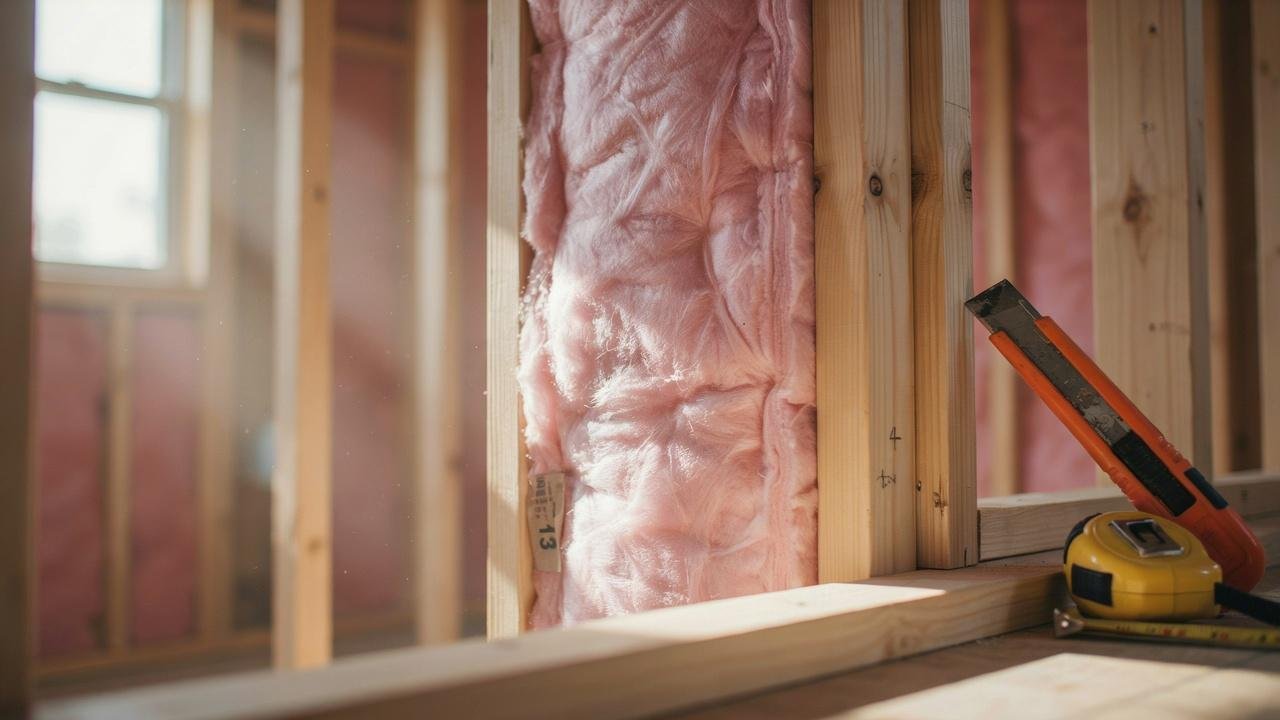
Pre-cut panels made for quick, simple installation between studs and joists.
Batt insulation comes in pre-cut panels or blankets. It is usually made from fiberglass, mineral wool, or natural fibers like cotton.
These panels are sized to fit standard spacing between wall studs, floor joists, and attic rafters.
Most batts come in widths of 15 or 23 inches, matching common framing measurements.
This makes them easy to fit without much trimming. You simply place the panel between the studs and secure it.
Batt insulation can be faced or unfaced. Faced batts have a paper or foil layer that acts as a vapor barrier. Unfaced batts skip this layer and work well in spaces that already have a moisture barrier.
This type of insulation is popular for DIY projects because it requires no special tools. Most homeowners can install it with just a knife and a tape measure.
What is Roll Insulation?
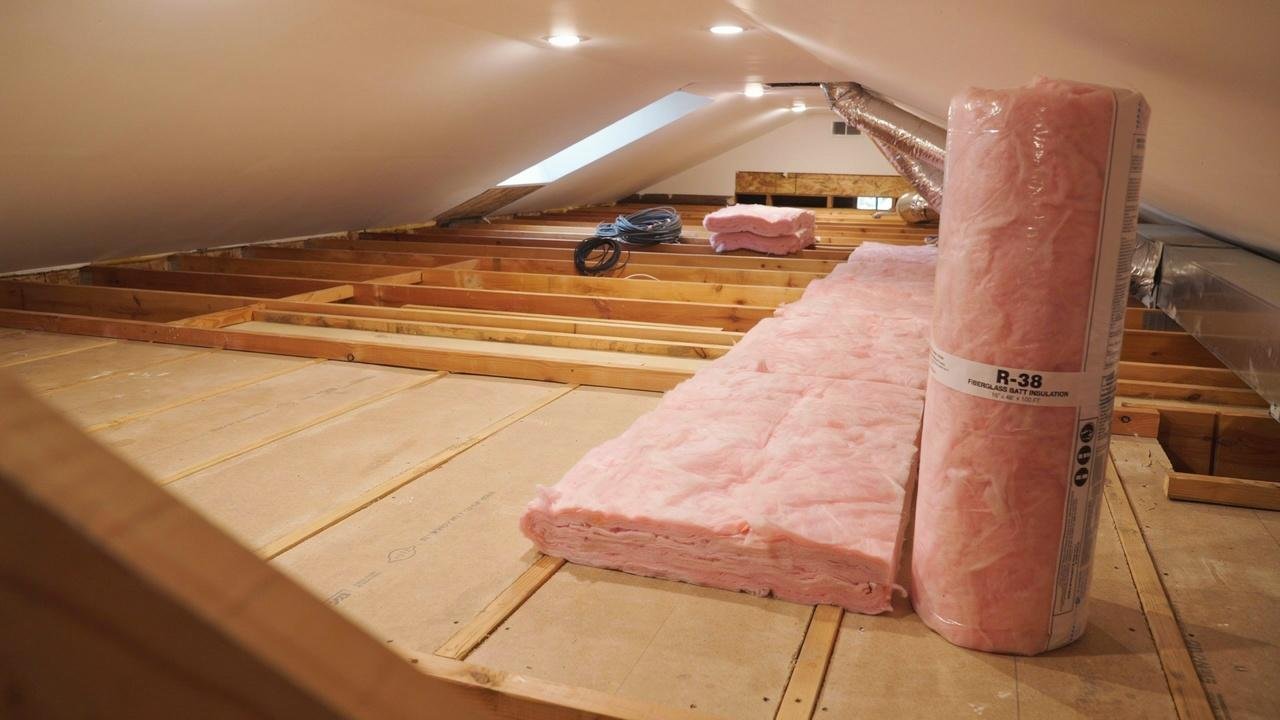
Long, continuous insulation rolls designed for covering large open areas fast.
Roll insulation is similar to batt insulation in material, but it comes in long, continuous rolls instead of pre-cut panels. You unroll it across the space and cut it to length as needed.
This format makes roll insulation a strong choice for covering large, open areas like attic floors.
Since it comes in one long piece, there are fewer seams and gaps compared to fitting multiple small panels.
Batt vs Roll Insulation: Key Differences at a Glance
A side by side look at how these two insulation types compare.
| Factor | Batt Insulation | Roll Insulation |
|---|---|---|
| Size and Packaging | Comes in pre-cut panels, usually 4 or 8 feet long | Comes in long continuous rolls that can stretch 20 feet or more |
| Installation Process | Placed piece by piece between framing | Unrolled across a surface and trimmed to fit the space |
| Best Applications | Works well in smaller or interrupted spaces | Performs better across large, open, uninterrupted areas like attic floors |
| Waste and Cutting Requirements | Requires less cutting since panels come pre-sized | May need more trimming around obstacles, which can create more waste |
| Cost Comparison | Priced similarly per square foot | Can sometimes cost slightly less for large open spaces due to fewer seams and less material waste |
| R-Value and Thermal Performance | Offers a similar R-value range to roll insulation | Offers a similar R-value range to batt insulation |
| DIY Friendliness | Easier for first-time DIYers because of pre-cut size | Requires more measuring and cutting, which can be trickier for beginners |
Batt vs Roll Insulation Comparison Table
Compare batt and roll insulation side by side to see how they differ in installation, coverage, cost, and ideal applications.
| Feature | Batt Insulation | Roll Insulation |
| Size | Pre-cut panels, 4 to 8 feet | Continuous rolls, 20+ feet |
| Installation | Fit piece by piece | Unroll and trim |
| Best Uses | Small or interrupted spaces | Large open areas |
| Coverage | Multiple panels per area | Single roll covers more area |
| Cutting Needed | Minimal | Moderate to high |
| Cost | Similar per square foot | Slightly lower for large spaces |
| R-Value | R-13 to R-38 | R-13 to R-38 |
| DIY Difficulty | Easier for beginners | Moderate skill needed |
Pros and Cons of Batt Insulation and Roll Insulation
Understand the strengths and drawbacks of batt and roll insulation before making your choice.
Batt Insulation Pros:
- Easy to install in small sections
- Pre-cut sizing saves time
- Good for spaces with obstructions
- Widely available at most stores
- Simple for first time DIYers
Batt Insulation Cons:
- More seams can mean more air gaps
- Less efficient for very large spaces
- Limited length per panel
Roll Insulation Pros:
- Fewer seams across large areas
- Faster coverage for open spaces
- Less material waste in big projects
- Strong performance in attics
- Available in various thicknesses
Roll Insulation Cons:
- Harder to maneuver in tight spaces
- Requires more cutting and measuring
- Can be awkward for one person to handle
Which Insulation Is Better for Different Areas of the Home?
Matching the right insulation type to the right room.
Walls
Batt insulation is usually the better fit for walls. Wall cavities are narrow and broken up by studs, which suits pre-cut panels well.
Attics
Roll insulation often works best for attic floors with open space. For attics with lots of obstructions like wiring or vents, batts may be easier to fit.
Floors
Both options work for floors, but batts are often easier to secure between floor joists, especially in shorter runs.
Ceilings
Roll insulation can cover ceiling spaces efficiently when the area is large and open. Batts work better around fixtures or uneven framing.
Basements and Crawl Spaces
Batt insulation tends to be more practical here due to tight spaces, pipes, and irregular framing common in basements and crawl spaces.
Factors to Consider Before Choosing Batt or Roll Insulation
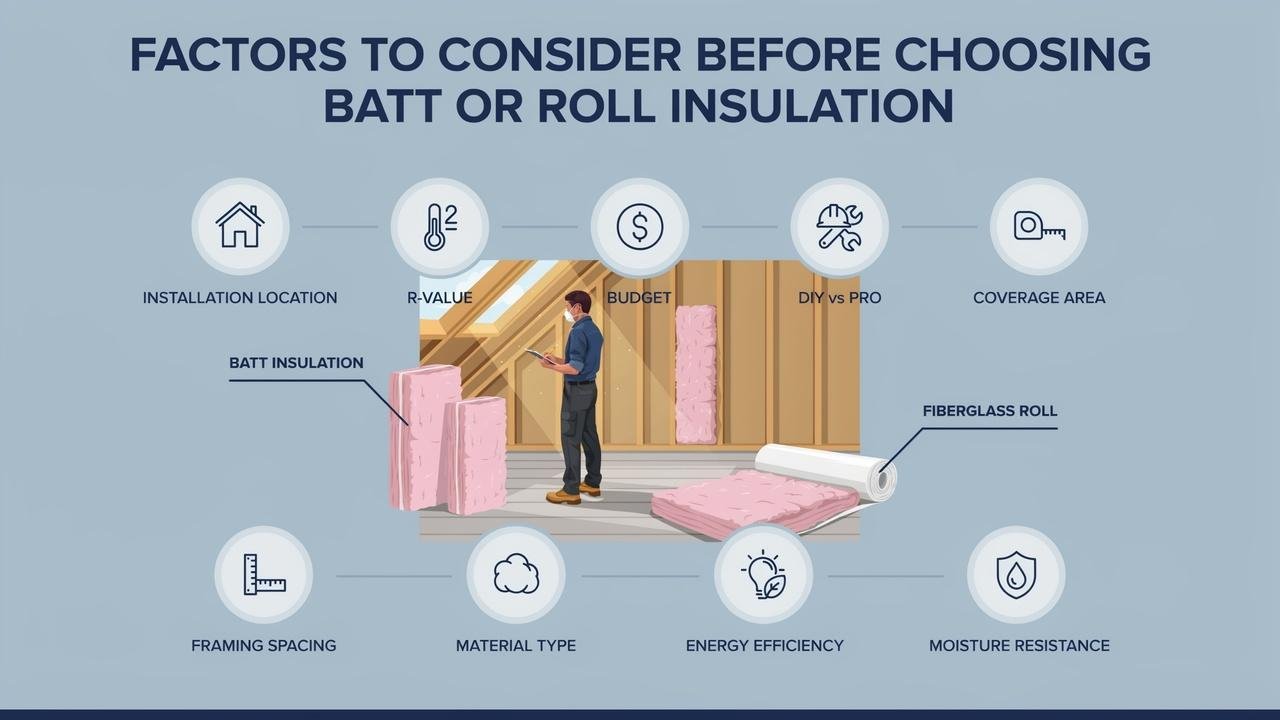
Key things to think about before making your final choice.
Project Size
Larger, open projects often favor roll insulation. Smaller or sectioned spaces tend to work better with batts.
Existing Framing
Standard framing spacing makes batt insulation a simple fit. Unusual framing may require more cutting regardless of which type you choose.
Budget
Both options are priced similarly, so budget alone may not be the deciding factor. Consider waste and labor time as part of the real cost.
DIY vs Professional Installation
If you are doing the work yourself, batts may feel more manageable. For larger jobs, a professional can install rolls quickly and efficiently.
Desired R-Value
Both batt and roll insulation can reach similar R-values. Choose the thickness that matches your climate and energy goals.
Moisture Control (Faced vs. Unfaced)
Faced insulation includes a vapor barrier, which helps control moisture. Unfaced insulation is better when a separate vapor barrier is already in place.
Common Mistakes to Avoid When Choosing Between Batt and Roll Insulation
Simple errors that can reduce insulation performance.
- Buying the wrong width: Always measure your stud or joist spacing before buying. The wrong width leads to gaps or compression.
- Compressing the insulation: Squeezing insulation into a tight space reduces its effectiveness. Insulation needs to stay fluffy to trap air properly.
- Ignoring moisture barriers: Skipping a vapor barrier in damp areas can lead to mold or reduced performance over time.
- Choosing based only on price: The cheapest option is not always the best fit. Consider your space, climate, and installation needs first.
- Skipping a test fit: Always check how the insulation fits before fully committing. A quick test fit can catch sizing issues early and save time later.
Tips Before Buying Batt or Roll Insulation
A few quick checks that can save you time and money later.
- Measure your space accurately before shopping
- Check your local climate zone for R-value needs
- Decide if you need faced or unfaced insulation
- Compare costs based on total project size
- Choose the type that matches your installation skill level
Conclusion
Picking between batt insulation and roll insulation does not have to feel overwhelming.
I have seen homeowners save real money just by matching the right type to their space. Think about your project size, your budget, and how comfortable you are with DIY work.
Once you know your space, the right choice becomes clear.
If this guide helped you, drop a comment below or share it with someone planning their own insulation project.
Got questions? Ask away, I would love to help.
Frequently Asked Questions
Is roll insulation cheaper than batt insulation?
Both options are usually priced similarly per square foot. Roll insulation can sometimes save money on large jobs due to less waste.
Can I mix batt and roll insulation in the same project?
Yes, many homeowners use rolls for open areas and batts for tight spaces. Mixing types is common and effective.
Which is easier for a beginner, batt or roll insulation?
Batt insulation is usually easier for beginners because it comes pre-cut. Roll insulation requires more measuring and cutting.
Does roll insulation work well in small attics?
Roll insulation works best in large, open attics. Smaller or obstructed attics may be easier to insulate with batts.
How do I know which R-value I need?
Your R-value depends on your climate zone and the area being insulated. Check local building codes for specific recommendations.