
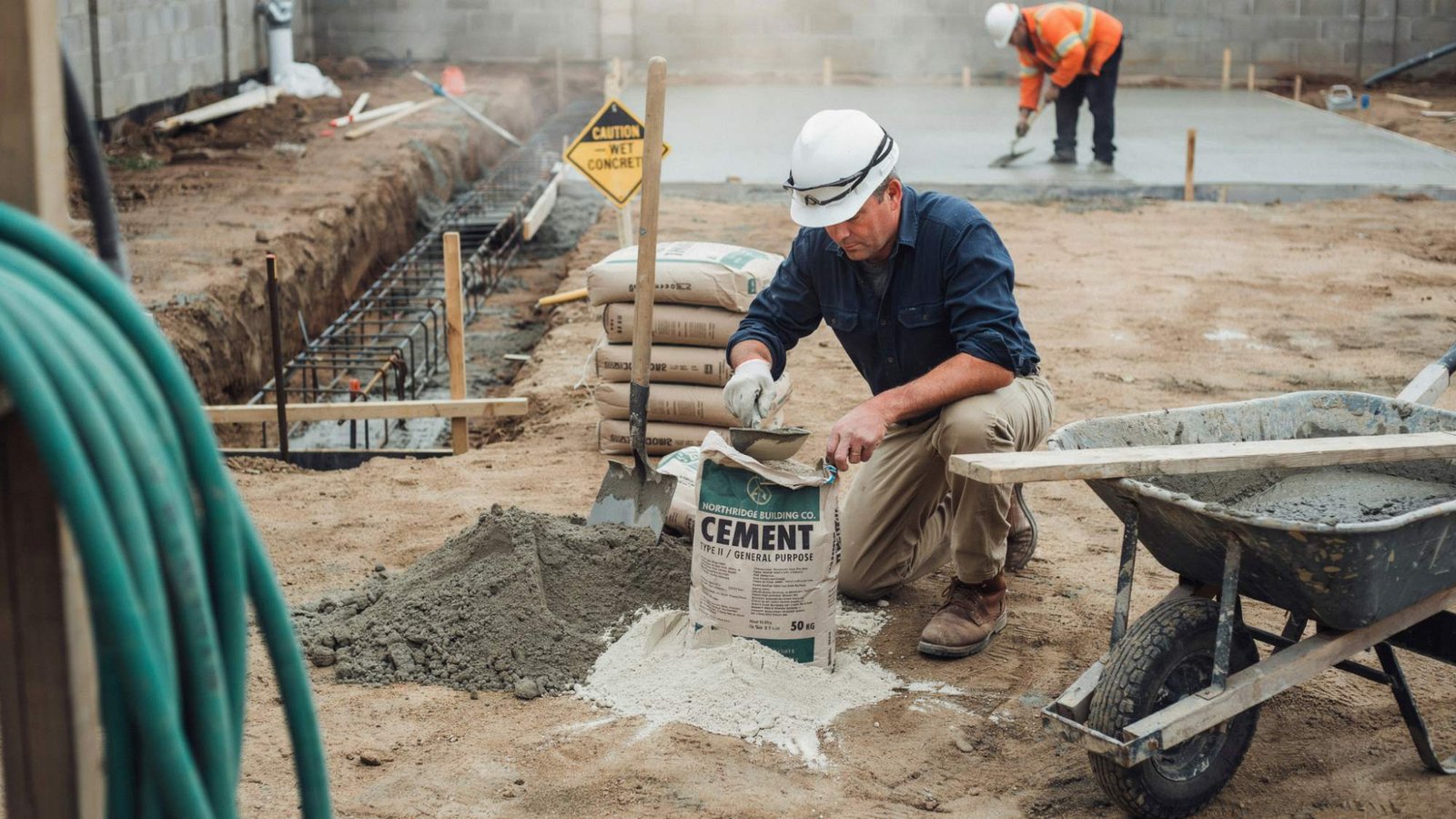
A strong home starts with a strong base, and that depends on the foundation concrete mix you choose.
If you are unsure about the right ratio or strength, this guide will help you solve that problem in a simple way.
I will explain what mix works best, why it matters, and how to avoid common mistakes.
In this article, you will learn the ideal ratios, concrete grades, and easy steps to prepare a durable mix for foundations.
I will also cover curing tips and key do’s and don’ts for better strength.
This guide is based on practical construction knowledge to help you make confident choices.You are in the right place if you want a safe and long-lasting foundation.
What is a Foundation Concrete Mix?
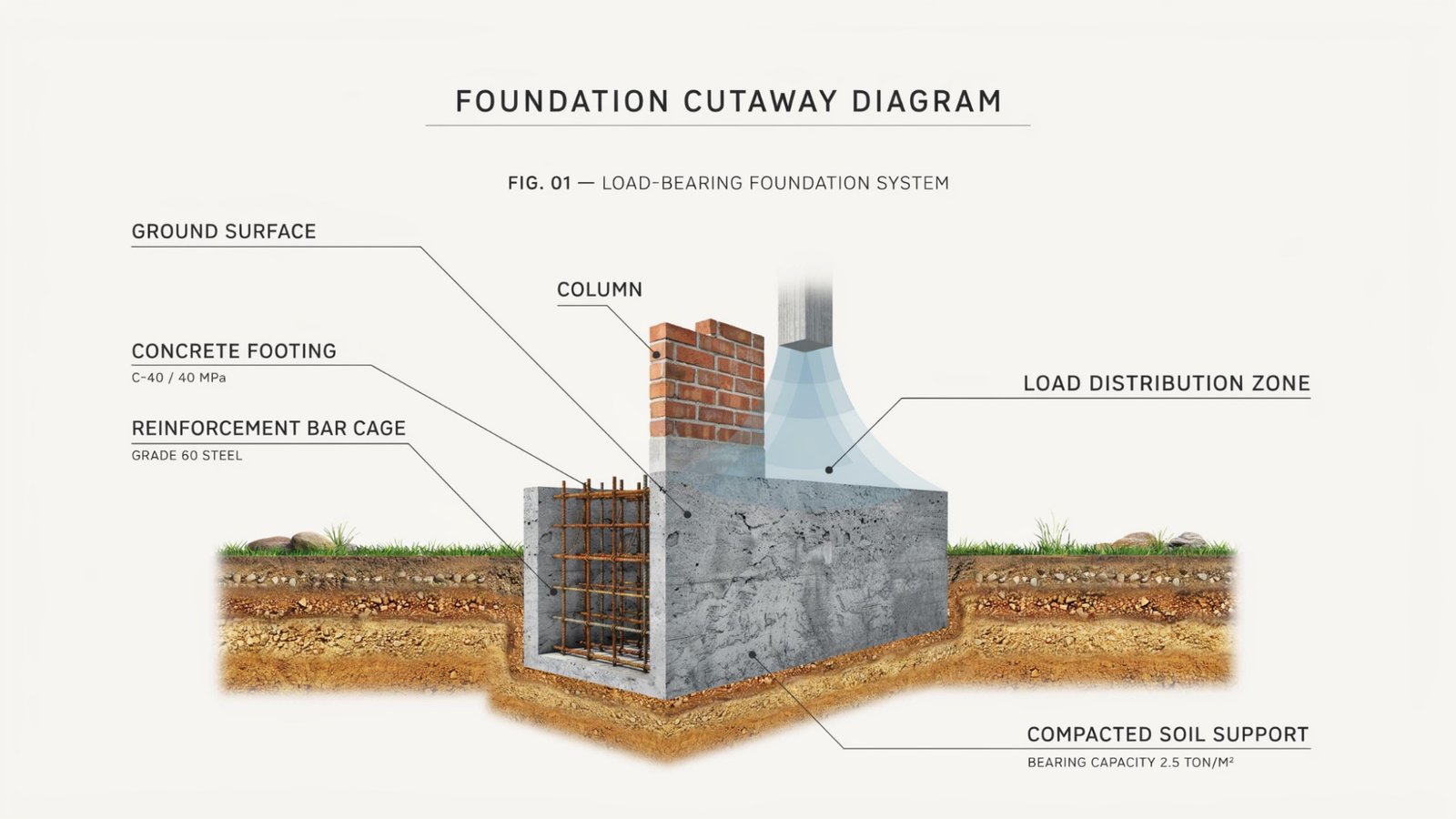
A foundation concrete mix is a carefully prepared blend of materials used to create the base of a structure.
It mainly includes cement, sand, aggregates, and water, each playing an important role in strength and stability.
Cement works as a binding agent that holds everything together. Sand fills small gaps and improves smoothness.
Aggregates like gravel add bulk and give the concrete its strength. Water activates the cement and helps the mixture harden over time.
When these materials are combined in the right proportion, they form a solid base that can support heavy loads.
A proper mix ensures the foundation stays strong, stable, and durable for many years without early damage or weakening.
Why Mix Ratio Matters for Foundations
The mix ratio in a foundation concrete mix directly affects how strong and reliable the structure will be.
A correct ratio ensures proper load-bearing capacity, allowing the foundation to safely support the weight of the building.
If the mix is too weak or uneven, it can lead to cracks, shrinkage, and reduced durability over time. Too much water can also weaken the concrete, while too little can make it hard to work with.
Common mistakes include incorrect measuring of materials, poor mixing, and ignoring recommended ratios like 1:2:4 or M20 grade standards.
A balanced mix ensures long-lasting strength, better resistance to weather changes, and fewer structural issues in the future.
Ideal Concrete Mix Ratios for Foundations
The ideal foundation concrete mix ratio is not the same for every project. It depends on how much load the structure will carry and how long you want it to last.
1:2:4 Mix Ratio
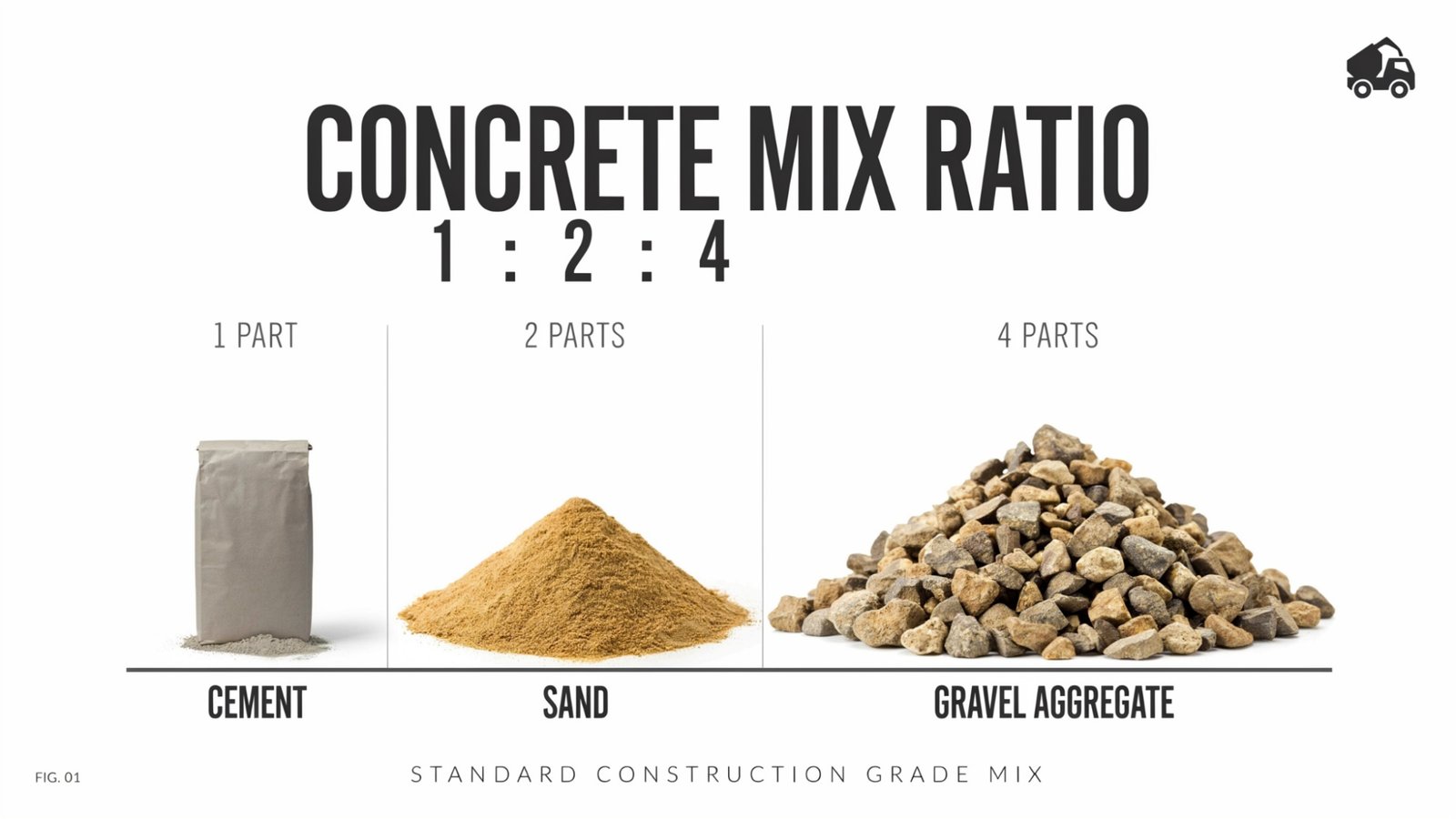
This is one of the most commonly used mix ratios in basic construction work. It contains one part cement, two parts sand, and four parts aggregates.
It is generally suitable for small residential projects or light foundation work. While it is easy to prepare and cost-effective, it is not always the strongest option for heavy structures.
It works best where loads are moderate and the building is single-storey or simple in design.
1:1.5:3 Mix Ratio

This mix is stronger because it has more cement compared to the 1:2:4 ratio. It provides better bonding and higher durability, making it suitable for stronger residential foundations.
Many builders prefer this mix when they want extra safety and long-term performance. It also performs better in slightly challenging soil conditions where extra strength is needed.
Higher Strength or Designed Mixes
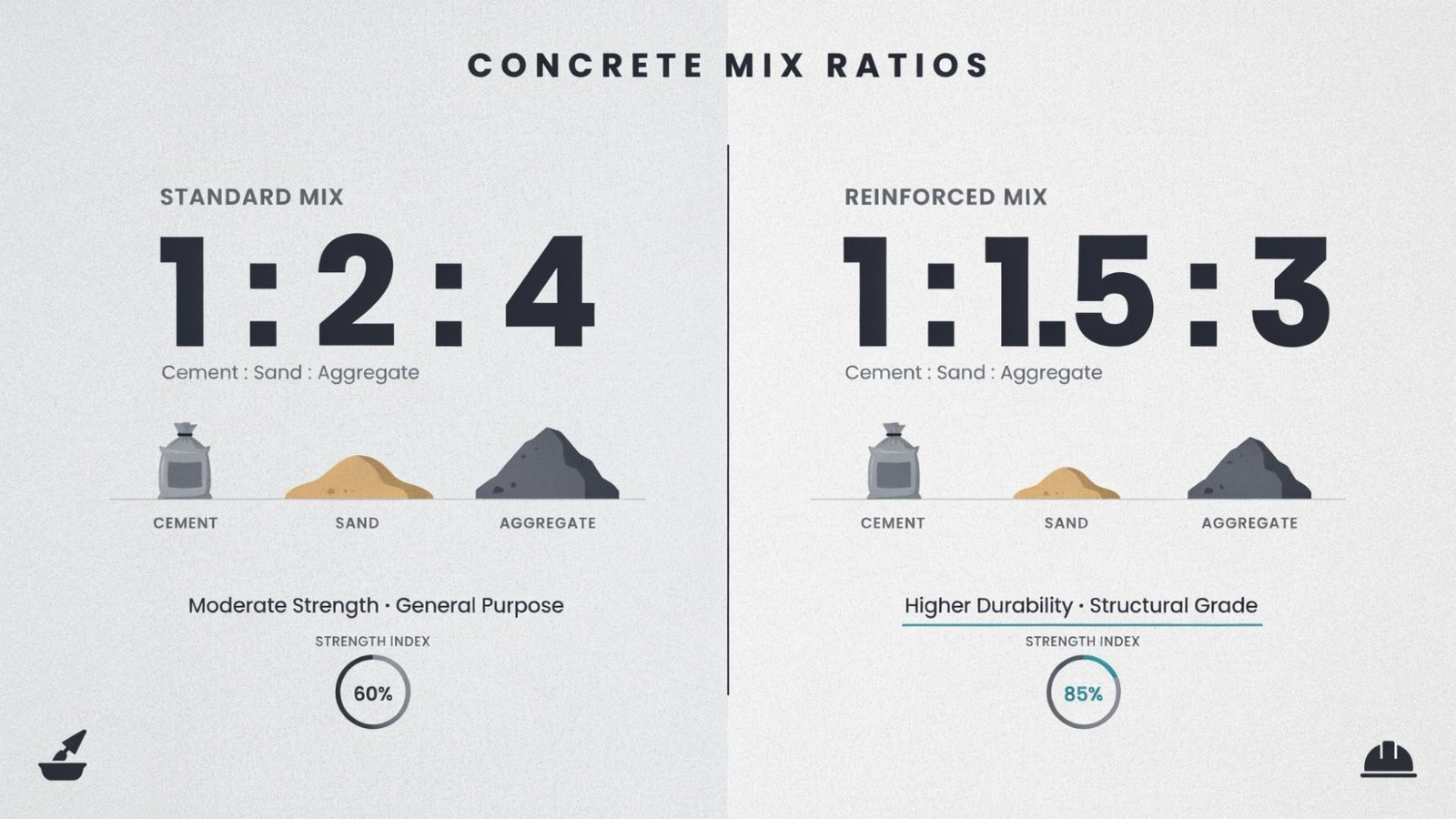
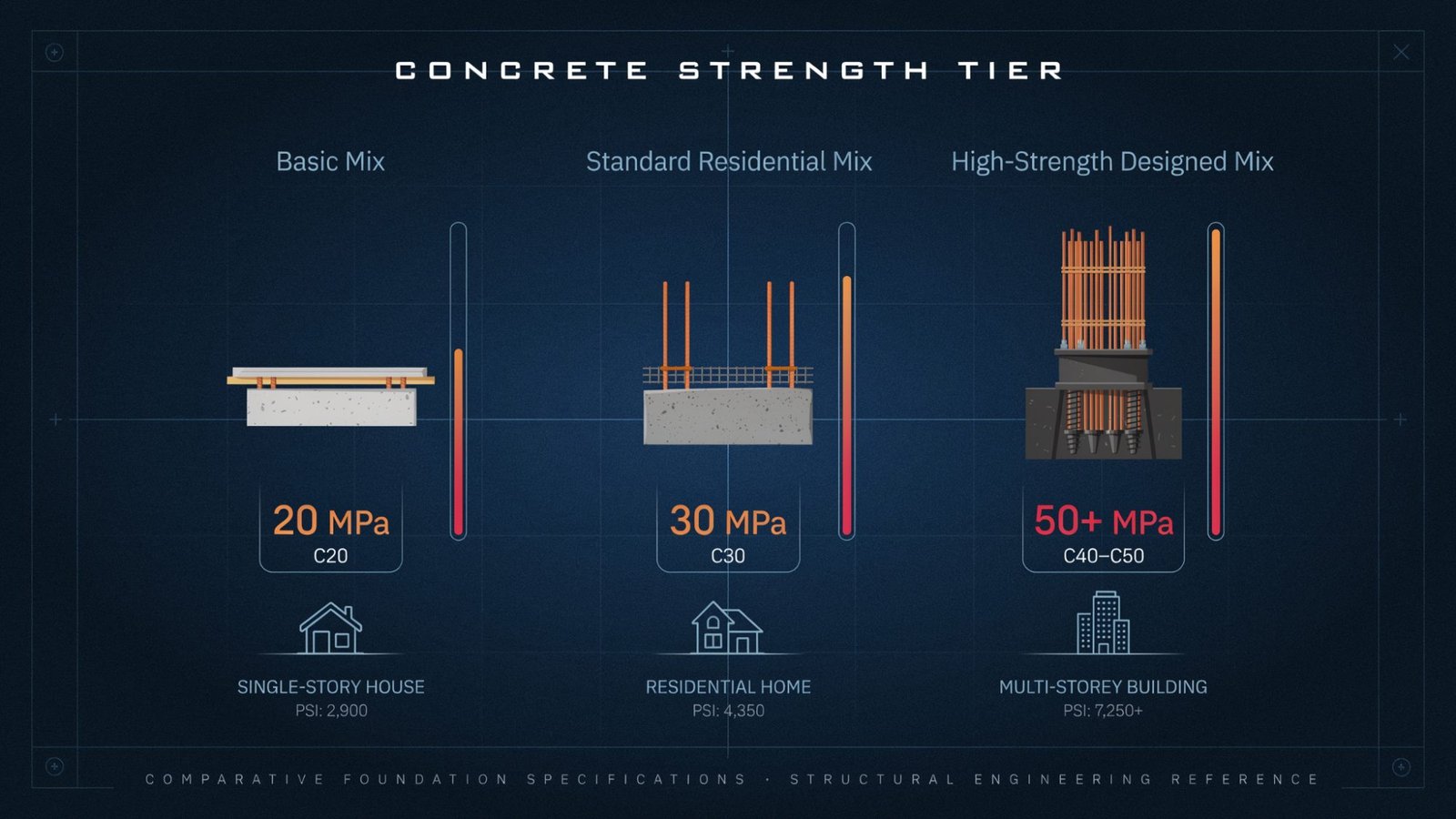
For multi-storey buildings, commercial structures, or heavy load-bearing foundations, engineers often use higher-grade or designed mixes like M20 or above.
These mixes are scientifically calculated to ensure safety, stability, and long-term durability under pressure.
They reduce the risk of structural failure and are essential for modern construction projects.
Recommended Concrete Strength (Grade Guide)

Concrete strength plays a key role in deciding how reliable your foundation concrete mix will be.
M10 Grade
M10 is a low-strength concrete mix mainly used for non-structural work such as leveling, pathways, or simple groundwork.
It is not suitable for main foundations because it cannot handle heavy loads or long-term structural stress.
M15 Grade
M15 is slightly stronger than M10 and is sometimes used for light residential work.
However, it is still considered basic and is not the preferred choice for major foundation work in modern construction standards.
M20 Grade
M20 is widely recommended for residential foundations. It provides a strong balance between strength and workability.
It is reliable for most single and double-storey homes and offers good resistance against cracking and weather conditions.
M25 Grade
M25 is a higher-strength concrete grade used for heavier structures.
It is suitable for multi-storey buildings, commercial projects, and areas where the foundation must support greater loads. It offers higher durability and better long-term safety.
How to Prepare the Perfect Foundation Concrete Mix
A strong structure starts with a properly prepared foundation concrete mix. The way you mix and handle materials directly affects strength, durability, and crack resistance.
Step-by-Step Mixing Process
- The first step is accurate measurement of all materials, cement, sand, and aggregates, based on the selected mix ratio (like 1:2:4 or M20 grade).
- Once measured, dry materials are thoroughly mixed until the color becomes uniform. This ensures even distribution of cement.
- After that, water is added slowly while mixing continues. The goal is to achieve a workable but not too wet consistency.
- Overwatering should be avoided because it weakens the final structure.
- After mixing, the concrete should be used quickly before it starts setting, usually within 30–45 minutes, to maintain proper strength.
Manual vs Machine Mixing

Manual mixing is done on a flat surface using hand tools like shovels. It is suitable for small projects but may lead to uneven mixing if not done carefully.
Machine mixing, on the other hand, uses a concrete mixer that ensures uniform blending of materials.
This method improves consistency, strength, and speed, making it ideal for medium to large construction projects.
Machine mixing also reduces human error and ensures better quality control, which is important for foundation work where strength is critical.
Importance of Water-Cement Ratio
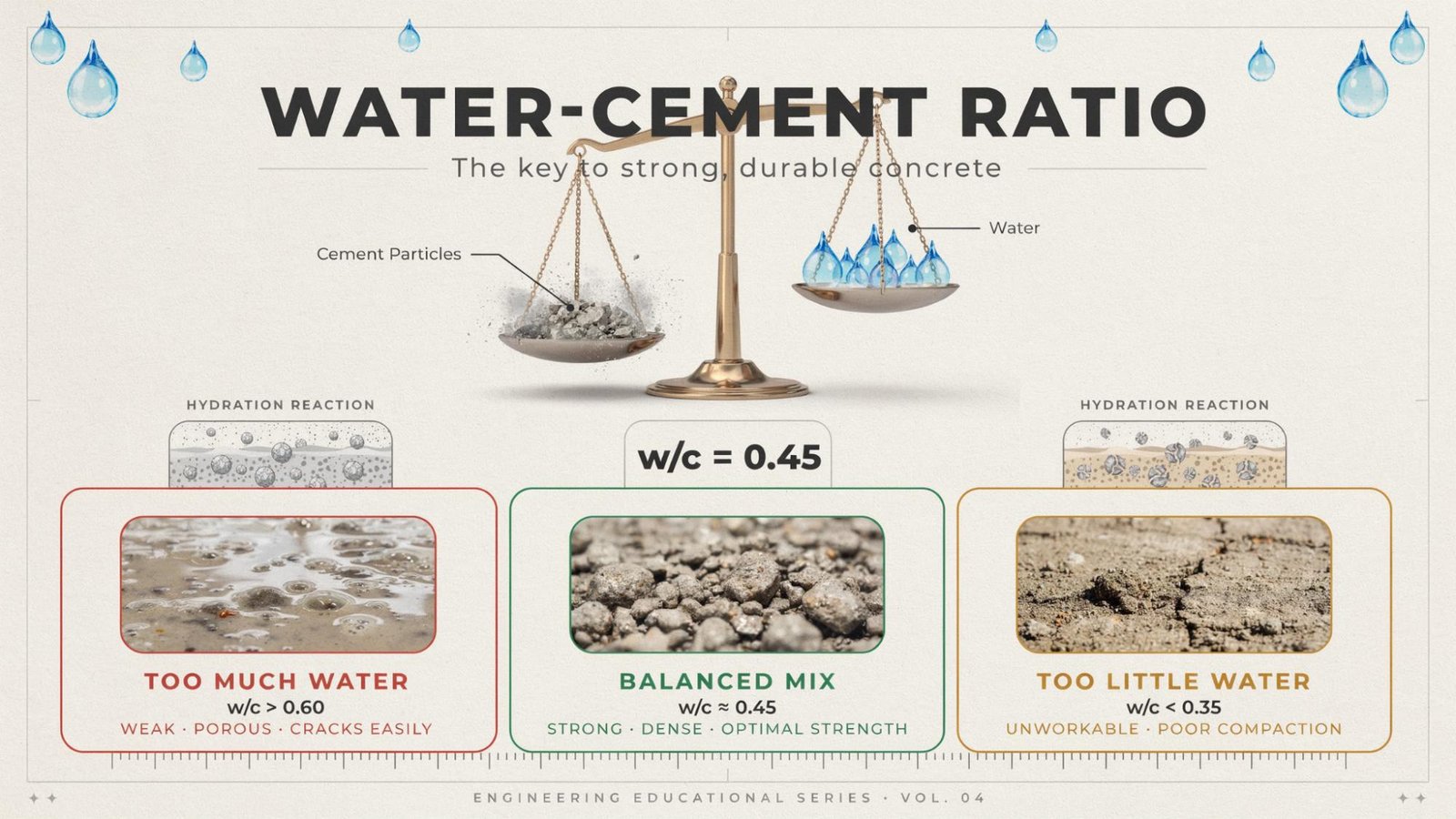
The water-cement ratio is one of the most important factors in a foundation concrete mix. It refers to the amount of water used compared to cement.
If too much water is added, the concrete becomes weak and prone to cracks. If too little water is used, the mix becomes difficult to place and may not bond properly.
A balanced water-cement ratio ensures proper hydration of cement, leading to strong bonding and long-term durability.
Maintaining the right balance is key to achieving a solid, crack-free foundation.
Common Mistakes to Avoid
A properly prepared foundation concrete mix can still fail if common mistakes are not avoided.
- Too much or too little water: Weakens concrete or makes it unworkable
- Poor-quality aggregates: Reduces overall strength and durability
- Inconsistent mixing: Leads to uneven strength in different parts
- Rushing the curing process: Prevents concrete from gaining full strength
Curing Process for Maximum Strength
Curing is a key step that helps concrete gain full strength and durability over time. Without proper curing, even a good mix can fail early.
- Why curing is important: It keeps moisture in concrete so cement can fully harden
- Ideal curing time for foundations: Usually 7 to 14 days minimum, depending on conditions
- Methods of curing: Water curing (spraying or ponding) and membrane curing (covering to retain moisture)
Tips for Strong and Durable Foundations
Strong foundations depend not just on mix quality but also on preparation and execution.
- Use of quality materials: Ensures better strength and long-term durability
- Proper soil preparation before pouring concrete: Prevents settlement and structural issues
- Reinforcement importance (steel bars): Adds tensile strength and prevents cracking under load
Conclusion
Building a strong home always starts with the right foundation concrete mix, and now you know how each step plays its part.
If you ever felt unsure about ratios or strength, I hope this guide made things clearer and easier to apply.
From my experience, even small attention to water balance and curing can change the final result a lot. Imagine your foundation staying solid for decades without trouble.
If this helped you, feel free to share your thoughts, drop a comment, or try more helpful guides.
Frequently Asked Questions
What is the best foundation concrete mix ratio?
The most commonly used ratio for homes is 1:2:4 or M20 grade concrete. It offers a good balance of strength, durability, and workability.
Which concrete grade is best for house foundations?
M20 is widely recommended for residential foundations. It provides reliable strength for most single and double-storey homes.
Why is water important in concrete mix?
Water activates cement and helps it bind all materials together. Too much or too little water can weaken the final structure.
How long should foundation concrete be cured?
Minimum curing time is usually 7–14 days depending on weather. Proper curing helps concrete gain full strength and durability.
What happens if the mix ratio is wrong?
Incorrect ratios can lead to weak, cracked, or uneven foundations. It may reduce the life and safety of the entire structure.