French doors bring in light and style. But that wall of glass can also invite trouble if it's not properly secured.
This guide walks you through everything you need to know to protect your home:checking your current setup, picking better locks, reinforcing the frame, and strengthening the glass itself.
We get it. Worrying about break-ins is stressful, and you want answers you can actually use today, not vague tips.
That's why this article sticks to clear, practical steps anyone can follow, no matter your budget or experience level.
I've spent time researching home security setups firsthand, and these are the same steps I'd recommend to a friend or family member.
By the end, you'll know exactly how to make your French doors safer, room by room, lock by lock.
Why French Doors Can Be a Security Risk
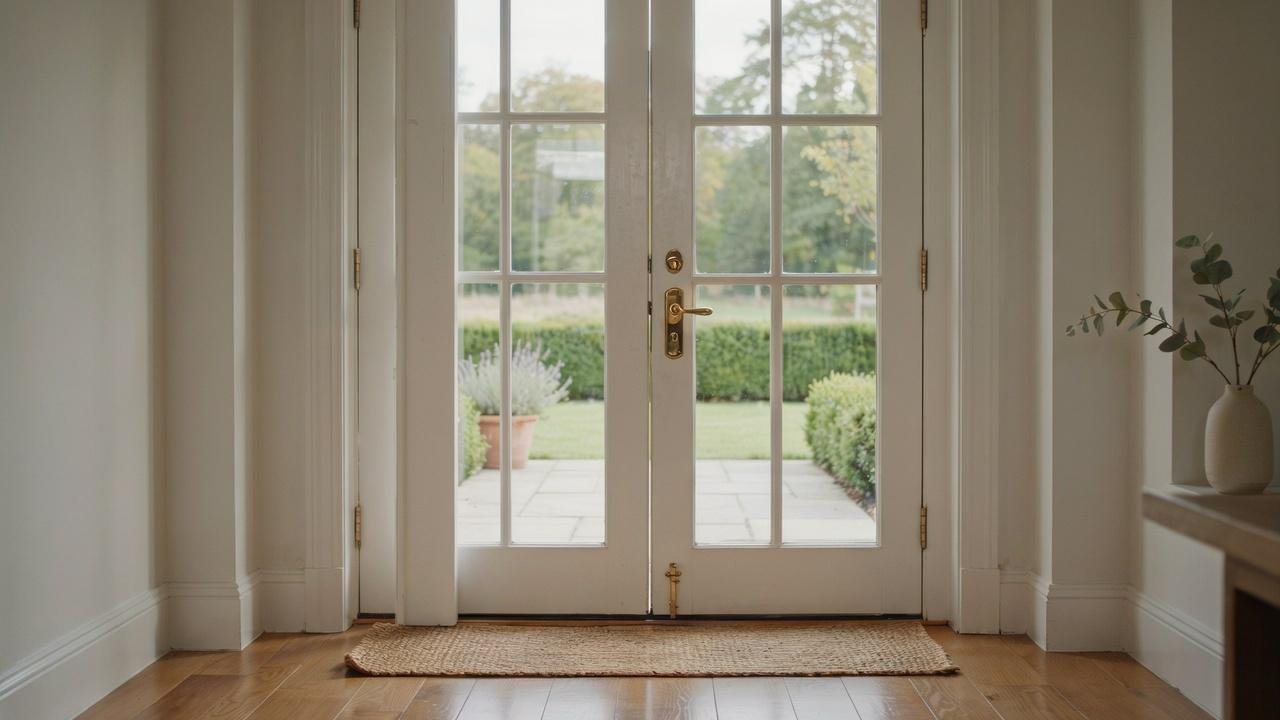
French doors are beautiful additions to any home, but their design has natural weak points. The large glass panels make it easy for intruders to see inside and check for valuables.
Many French doors also rely on a single lock or a weak strike plate, which makes forced entry easier than with a solid front door.
The gap between the two panels is another common issue. Over time, this gap can widen, leaving room for tools to pry the door open.
Without the right upgrades, French doors can become one of the easiest entry points for a break-in.
Assess Your French Door's Current Security
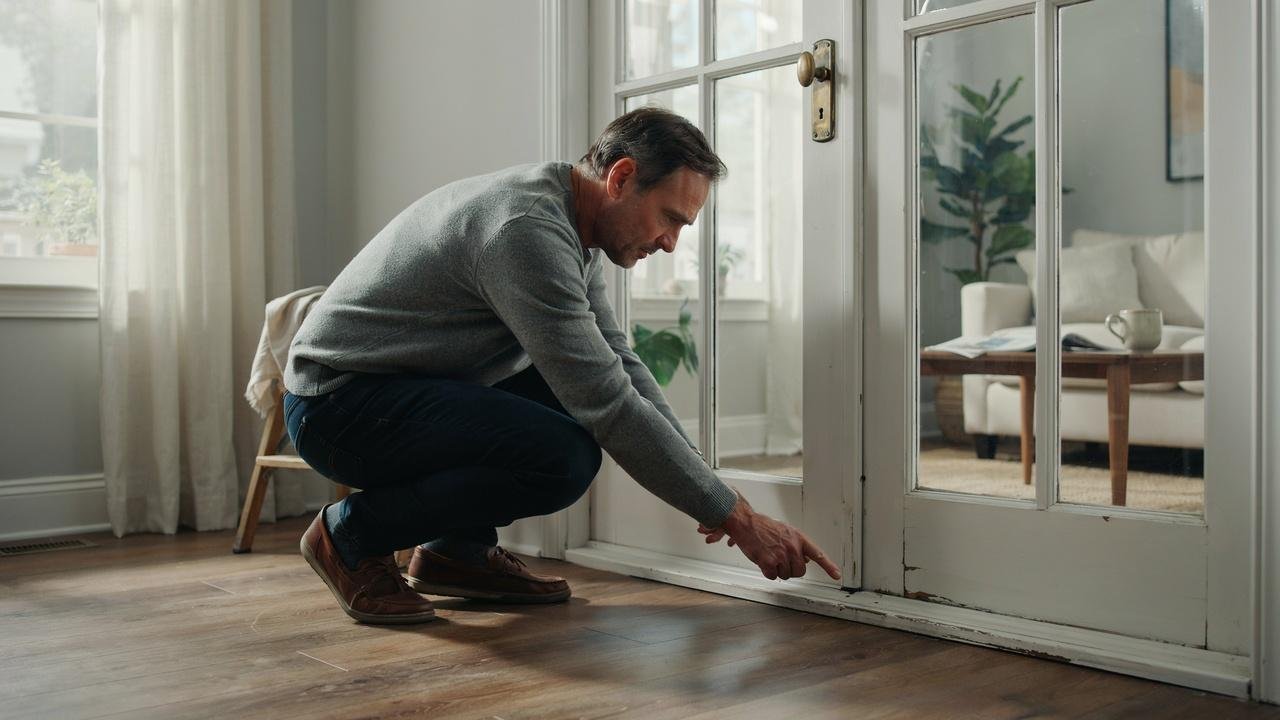
Before making upgrades, it helps to know what you're working with. A quick inspection can reveal problems you might not notice during daily use.
Inspect the Door Frame for Damage
Check the frame for cracks, soft wood, or warping. Damaged frames cannot hold locks or hinges properly, making it easier to force the door open.
Press firmly along the frame edges with your hand. If wood feels soft or crumbly, moisture damage may already be weakening its structure.
Check Locks, Handles, and Latches
Test each lock and handle. If they feel loose, sticky, or don't fully engage, they need repair or replacement.
Open and close the door several times while locking it to see if the bolt lines up smoothly with the strike plate.
Examine Hinges for Wear and Rust
Rusty or worn hinges can weaken under pressure. Replace any hinges that look damaged or feel unstable. Lift the door slightly while it's open.
Excess wobble or a dragging sound usually points to hinge wear that needs attention.
Look for Gaps Around the Door Panels
Small gaps allow tools to slip through. Seal or repair any gaps you find between the panels or around the frame. A simple test is sliding a credit card into any gap.
If it slides in easily, the gap is wide enough to be a problem.
Upgrade Your French Door Locks
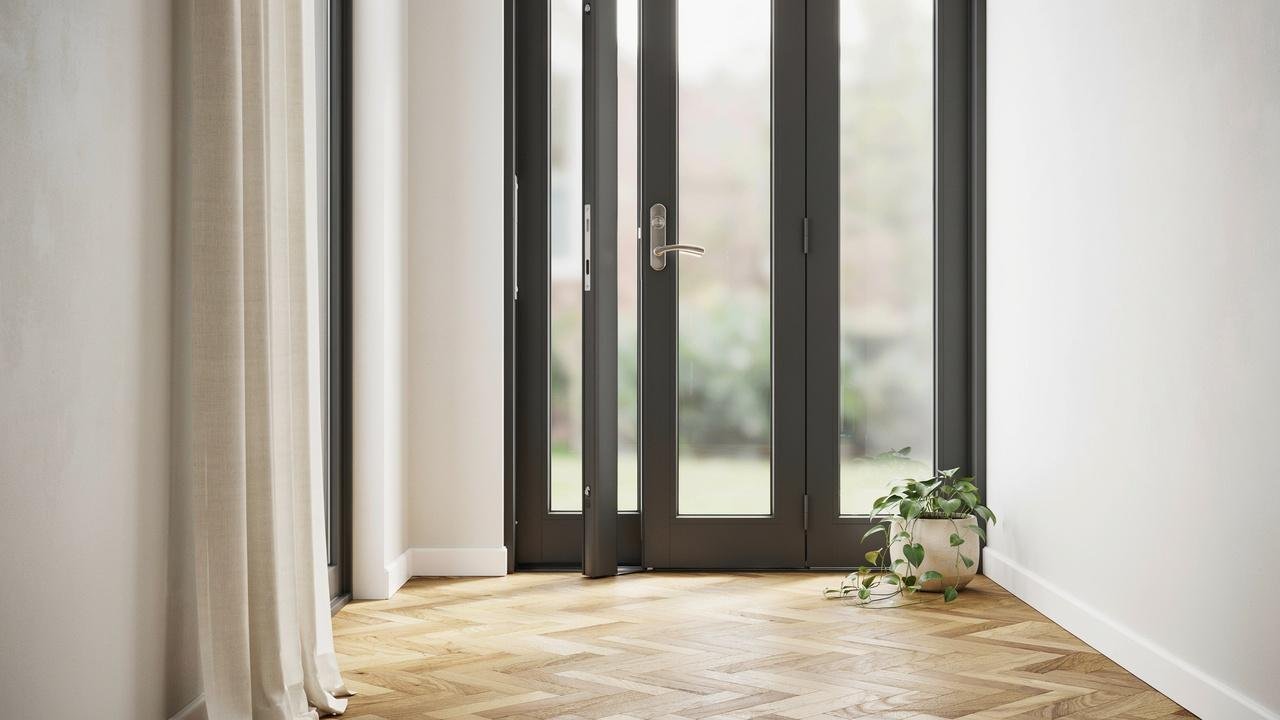
Strong locks are the first line of defense. Here are the best options to consider.
Install Keyed Deadbolt Locks
A deadbolt adds a strong layer of protection beyond the standard handle lock. Choose a deadbolt rated for high security.
Look for a Grade 1 or Grade 2 rating, since these hold up better against kicks and pry attempts than basic models.
Consider Multi-Point Locking Systems
These systems lock the door at multiple points along the frame, making it much harder to force open.
Most multi-point systems engage at the top, middle, and bottom of the door with a single turn of the handle, so there's no extra step to remember.
Add Auxiliary or Secondary Locks
A secondary lock, such as a slide bolt, adds extra protection without major installation work. These are especially useful on the inactive panel, where a standard lock often isn't enough on its own.
Upgrade to Smart Locks for Added Security
Smart locks let you monitor and control access remotely. Many models send alerts if someone tries to tamper with the door.
Some also keep an entry log, so you can see exactly when the door was locked or opened.
Reinforce the Door Frame and Hardware
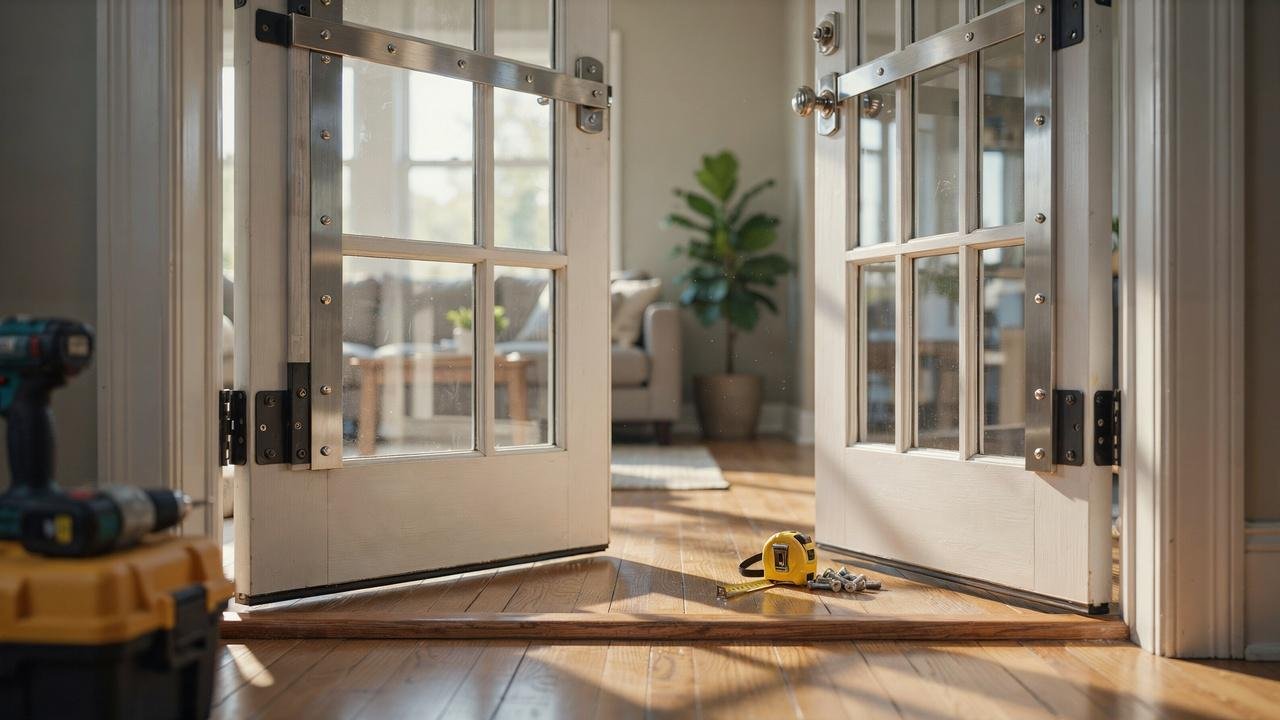
Strong locks only work if the frame around them is just as strong.
Strengthen the Door Frame
Add solid wood blocking behind the frame to prevent it from splitting under force.
This blocking gives screws something solid to grip instead of thin trim, which is often the first thing to crack during a forced entry attempt.
Replace Weak or Damaged Hinges
Swap out old hinges for heavy-duty versions with longer screws that reach into the frame's structure.
Three-inch screws are a common upgrade, since they bite into the wall studs rather than just the door trim.
Install Reinforcement Plates
Metal plates around the lock and strike area add extra resistance against kicks or pry attempts.
These plates spread the force of an impact across a wider area, reducing the chance of the frame splitting near the lock.
Secure Exposed Screws and Fasteners
Replace short screws with longer ones that anchor deeper into the wall studs.
This is one of the cheapest upgrades on this list, often costing just a few dollars for a noticeable improvement in strength.
Strengthen the Glass Against Break-Ins
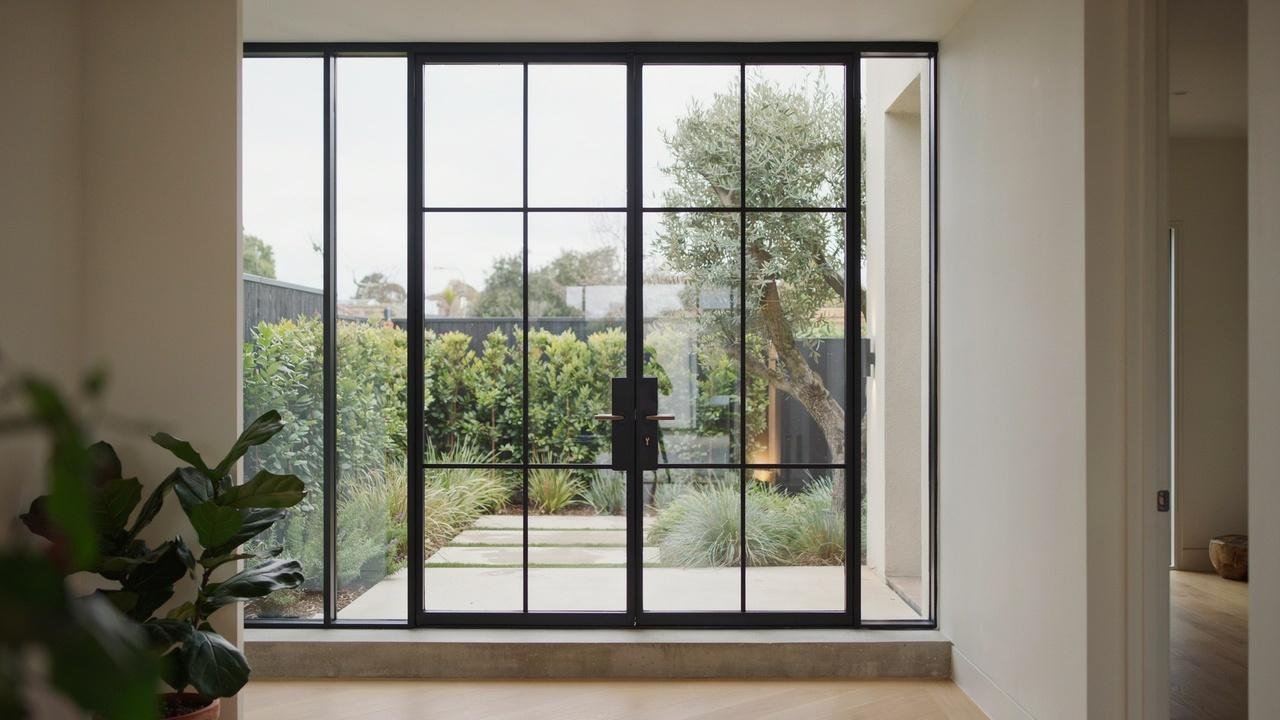
The glass is often the most vulnerable part of a French door.
Apply Security Window Film
This film holds glass together if it's struck, slowing down intruders significantly.
Most films are nearly invisible once applied, so they don't change how your doors look from inside or outside.
Upgrade to Laminated Glass
Laminated glass has a protective layer that resists shattering, even under heavy impact.
It works much like a car windshield, where the inner layer keeps the glass from breaking into separate pieces.
Consider Impact-Resistant Glass Options
These panels are built to withstand forceful hits, ideal for ground-level doors.
Many are also rated for storm protection, so they offer a bonus benefit if you live in an area with severe weather.
Benefits of Shatter-Resistant Glass
This type of glass reduces injury risk and makes break-ins far more difficult and time-consuming.
The extra time it takes to break through is often enough to make an intruder give up and move on.
Install a French Door Security Bar
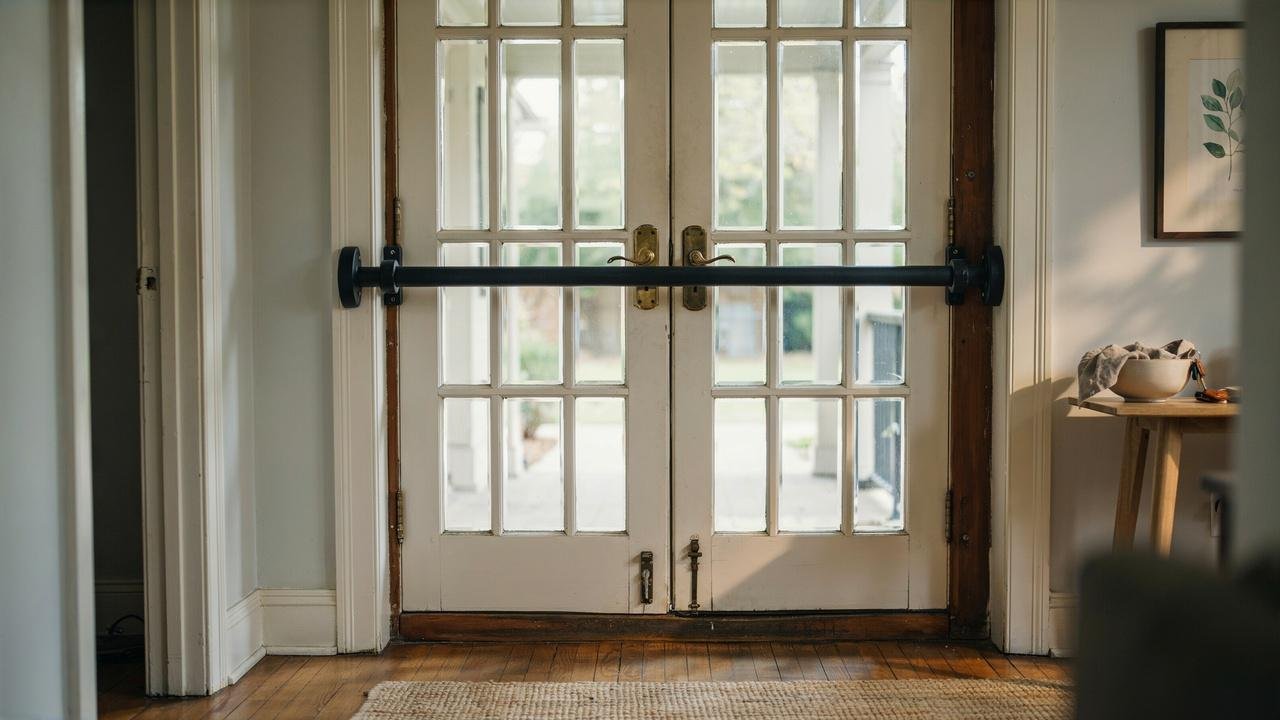
A security bar is one of the simplest, most effective upgrades you can add.
How Security Bars Work
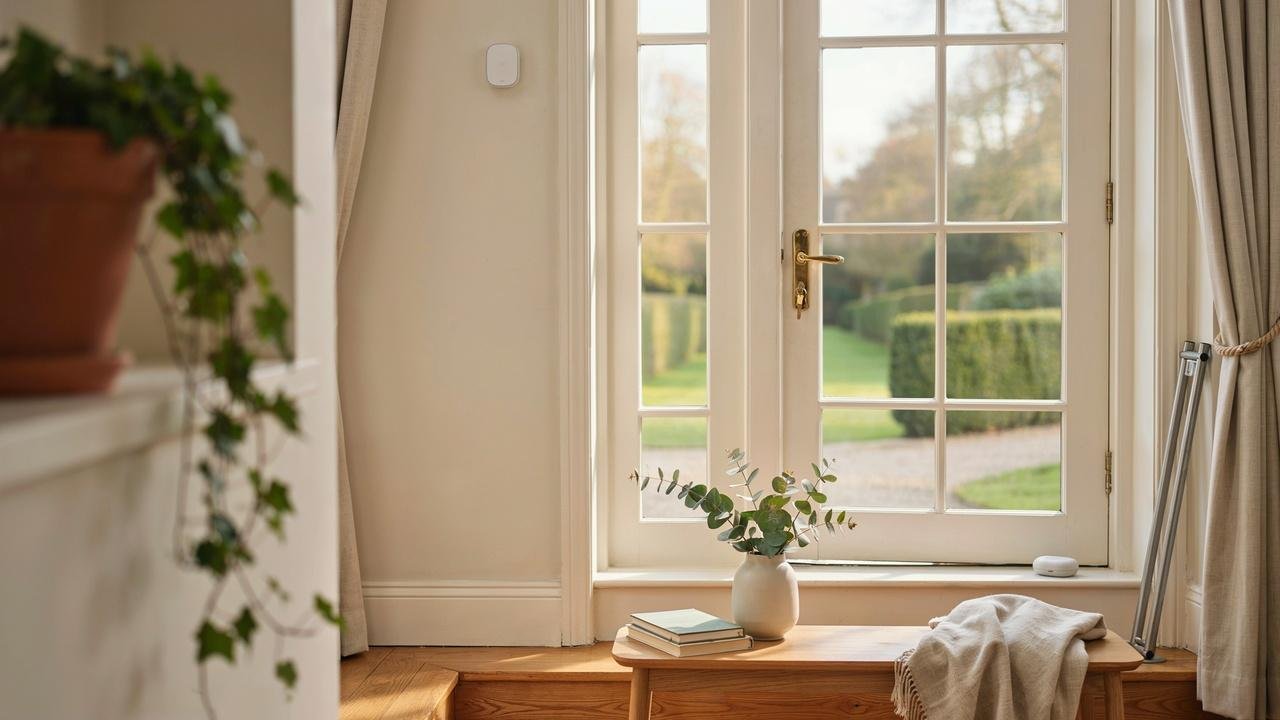
These bars brace against the door and floor, blocking it from being pushed open.
The bar wedges at an angle, so any force applied to the door pushes the bar further into the floor instead of giving way.
Benefits of Using a Security Bar
They're affordable, easy to install, and add a strong physical barrier without changing the door's look.
Most can be set up in minutes and removed just as quickly when you need to use the door.
Choosing the Right Security Bar
Look for adjustable, sturdy bars made from solid steel for the best results.
Adjustable length is important, since French door heights can vary depending on the home.
Where to Install Security Bars for Maximum Protection
Place them across the most vulnerable panel, usually the one without the main lock.
If both panels open, consider using two bars for full coverage.
Improve Visibility Around French Doors
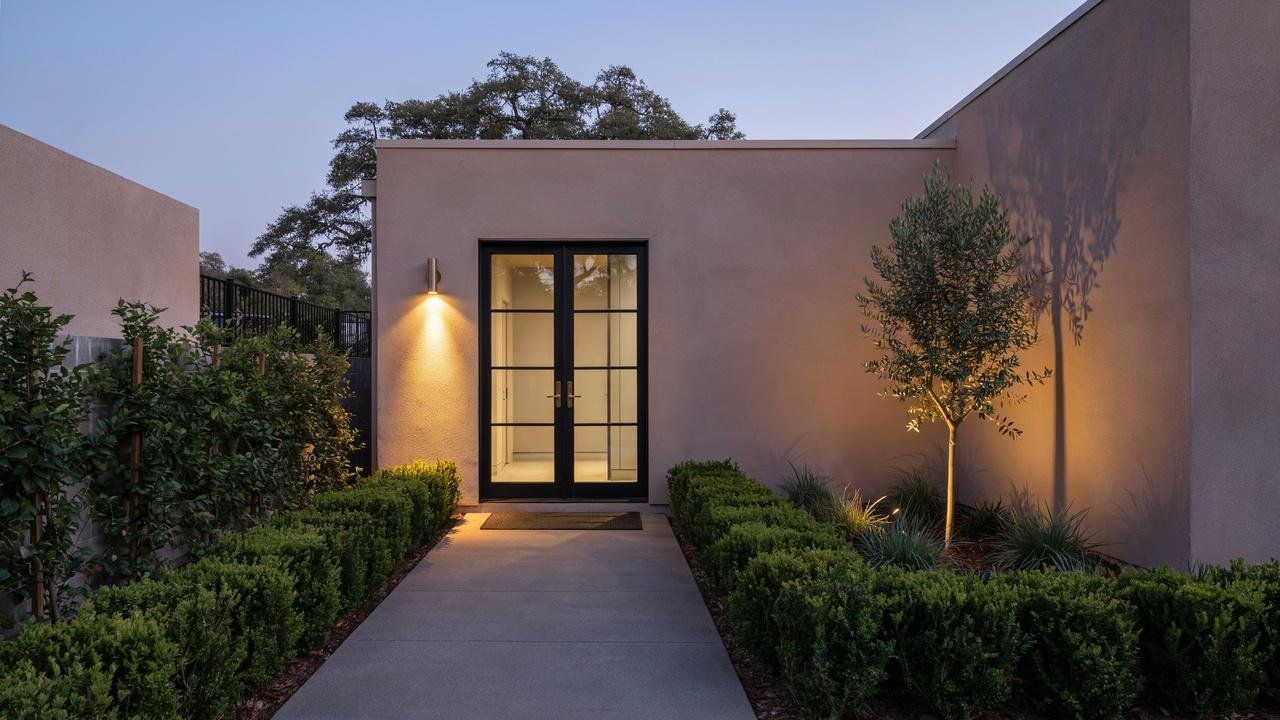
Better visibility discourages intruders before they even try the door.
Install Motion-Activated Lighting
Bright lights that trigger on movement can scare off anyone lurking near your doors.
Position the light slightly above eye level so it covers a wide area without creating harsh glare.
Trim Landscaping Near Entry Points
Overgrown bushes give intruders a place to hide. Keep the area around your doors clear.
A good rule of thumb is keeping shrubs no taller than three feet near windows and doors.
Add Outdoor Security Cameras
Cameras act as both a deterrent and a way to catch activity on record.
Visible cameras alone often discourage break-ins, even before anyone reviews the footage.
Use Door and Window Sensors
These sensors alert you the moment a door or window is opened unexpectedly.
Many connect to a smartphone app, so you get a notification no matter where you are.
Prevent Forced Entry With Additional Security Measures
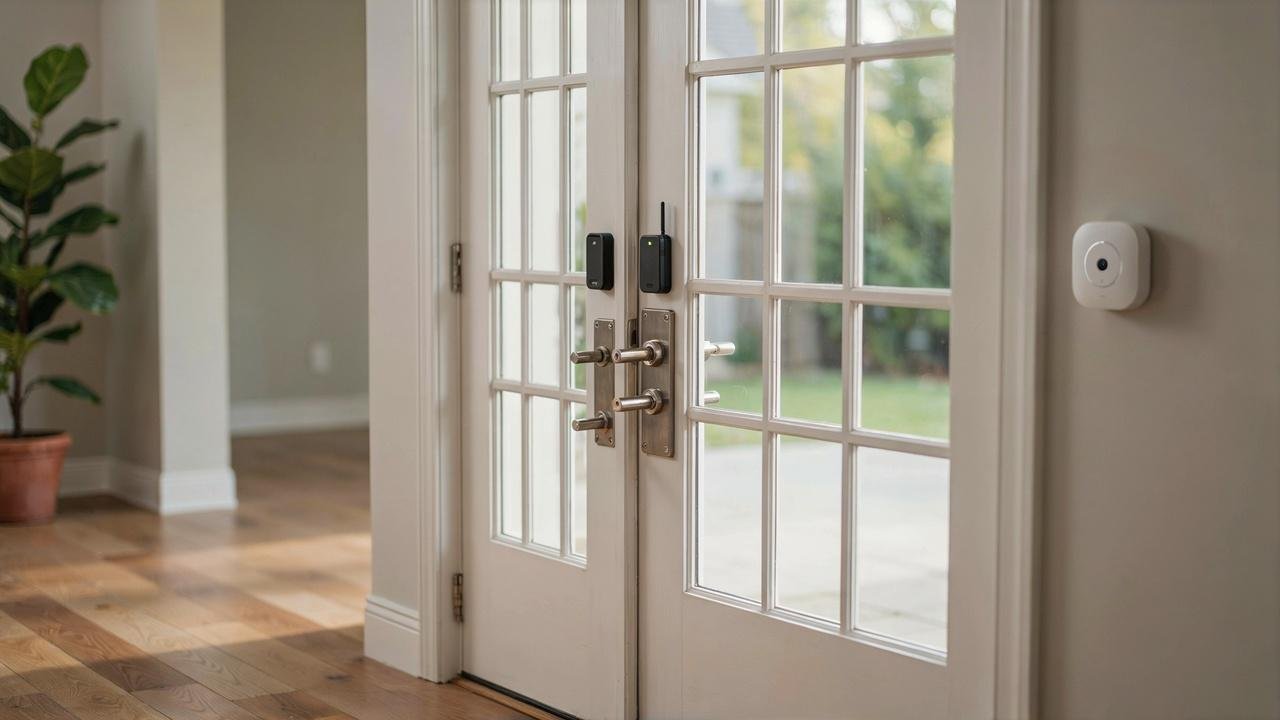
A few extra steps can close common security gaps.
Secure the Inactive Door Panel
Many break-ins target the panel that isn't used daily. Lock it with flush bolts at the top and bottom.
These bolts anchor directly into the frame, making that panel just as hard to force open as the active one.
Install Door Alarms for Extra Protection
Simple alarms sound loudly if the door opens without the right code or key.
Battery-powered versions are easy to install and don't require any wiring.
Add Glass Break Sensors
These sensors detect the sound or vibration of breaking glass and trigger an alert.
They can be placed near the glass or mounted on the ceiling to cover the whole room.
Integrate French Doors With a Home Security System
Connect your doors to your main system for full coverage and remote monitoring.
This way, every entry point in your home is tracked from a single app or control panel.
How to Maintain French Door Security Over Time
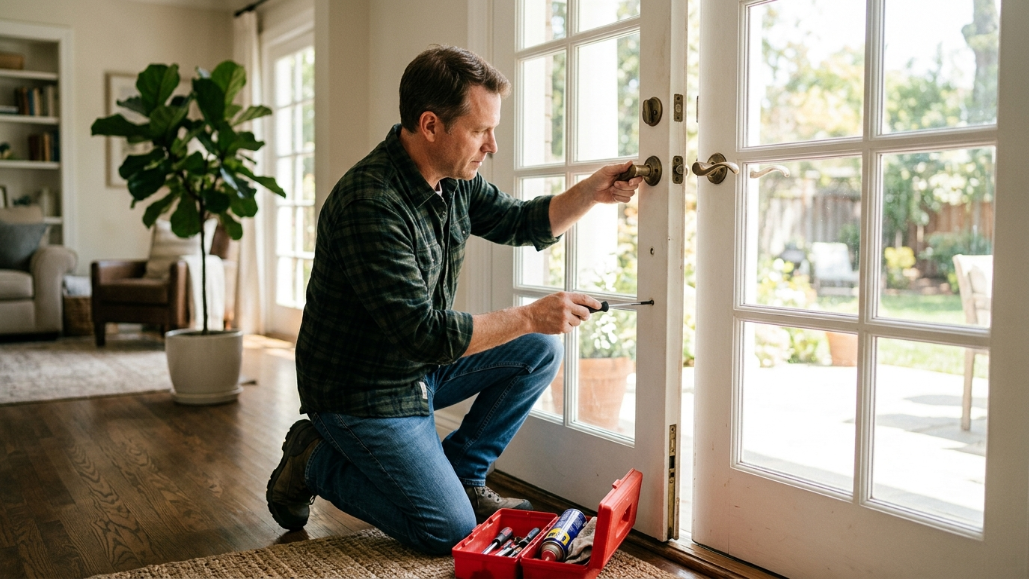
Security isn't a one-time job. Regular upkeep keeps everything working properly.
Perform Routine Security Inspections
Check your doors every few months for new wear or damage.
Seasonal changes in temperature and humidity can cause wood frames to shift, so it's worth checking after extreme weather too.
Test Locks, Sensors, and Alarms Regularly
Make sure every device works as expected, especially after storms or seasonal changes.
A quick monthly test takes only a few minutes and can catch problems before they become bigger issues.
Replace Worn or Damaged Components Promptly
Don't wait until something fails completely.
Replace parts as soon as you notice problems. Waiting too long often means a small fix turns into a bigger, more expensive repair.
Upgrade Security Features as Technology Improves
Newer locks and sensors often offer better protection. Update your system when it makes sense.
Even small upgrades, like switching to a smart deadbolt, can make a noticeable difference.
Benefits of Securing French Doors
Greater Protection Against Break-Ins
Strong locks and reinforced frames make it much harder for intruders to get inside.
This added resistance buys time, and time is often what stops a break-in before it happens.
Improved Peace of Mind
Knowing your doors are secure helps you relax, especially when you're away from home.
That peace of mind extends to your family too, especially if kids are home alone after school.
Enhanced Home Value and Safety
Updated security features can be a selling point and keep your family safer day to day.
Buyers often see strong security as a meaningful upgrade when comparing similar homes.
Better Long-Term Durability of Doors and Hardware
Stronger hardware means less wear over time, saving you money on repairs.
Reinforced frames and quality locks also tend to operate more smoothly for years longer.
Tips for Keeping French Doors Secure
- Lock French Doors Every Time You Leave Home – Tie this habit to another action, like locking up right after grabbing your keys, so it never gets skipped.
- Keep Valuables Out of Sight From Glass Panels – Arrange furniture or curtains so electronics and bags aren't visible from outside.
- Use Multiple Layers of Security – Combine locks, bars, and sensors, since layering several upgrades together makes a break-in far less likely to succeed.
- Regularly Check and Tighten Hardware, Replace Old Locks Promptly – A quick screwdriver check every few months catches loose screws and hinges early, and any lock that feels stiff or sticks often should be replaced before it fails.
- Use Timers and Get a Professional Assessment – Timers on lights make your home look occupied while you're away, and a free professional security assessment can spot weaknesses you might miss on your own.
Conclusion
Securing your French doors doesn't have to feel overwhelming.
We've covered the locks, the glass, the frame, and the small habits that add up to real protection.
I added a security bar to my own French doors last year, and honestly, it gave me a lot more peace of mind on busy nights when I forget to double-check the locks.
Now it's your turn. Try one tip this week and see the difference.
Drop a comment below with your own French door security questions, share this with a friend who needs it, or check out our other home security guides.
Frequently Asked Questions
Can French Doors Be Made More Secure?
Yes, with the right locks, reinforced frames, and security bars, French doors can be just as secure as standard entry doors.
What Is the Best Lock for French Doors?
A multi-point locking system paired with a keyed deadbolt offers the strongest protection for most French doors.
Do French Door Security Bars Really Work?
Yes, security bars physically block the door from being pushed open, making forced entry much harder.
Is Security Window Film Effective Against Break-Ins?
Yes, it holds shattered glass together, slowing down intruders and giving you valuable time to react.
How Can I Secure French Doors Without Replacing Them?
You can add deadbolts, security bars, window film, and sensors without ever needing to replace the doors themselves.