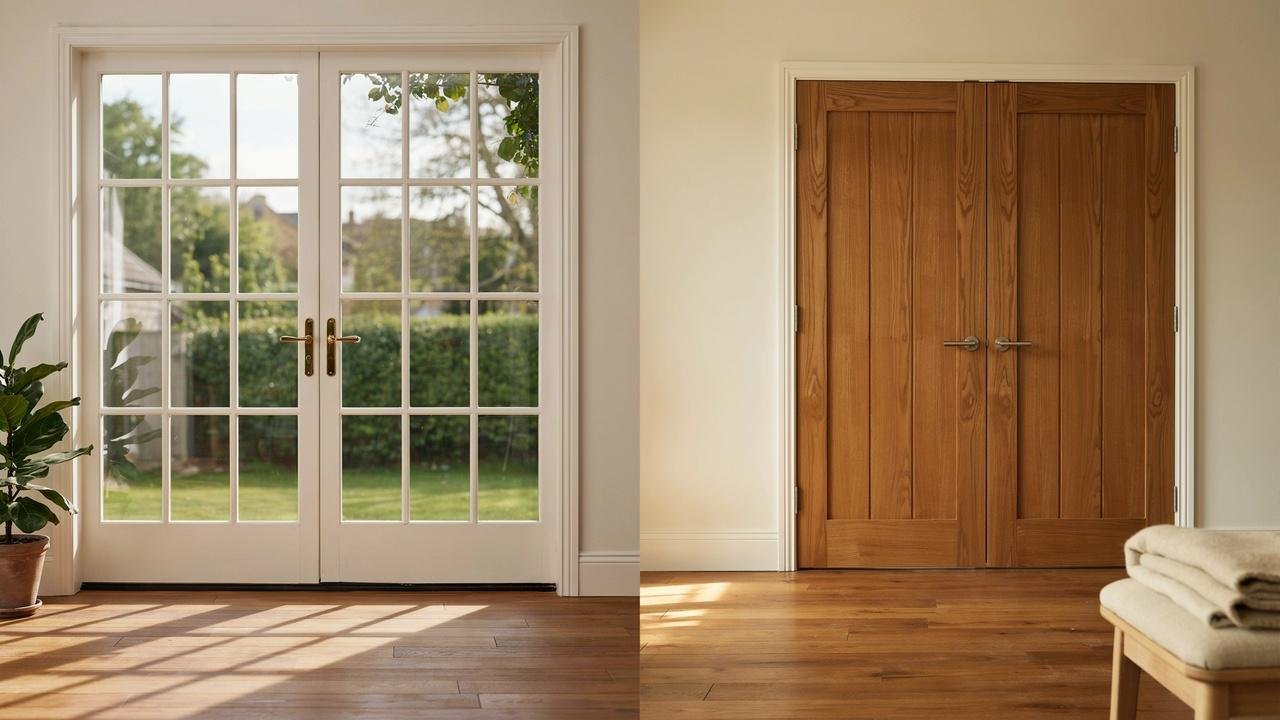
Picking new doors for your home is not as simple as it looks. French doors and double doors both look grand, but they work very differently once installed.
This guide breaks down the design, cost, security, and light differences between the two so you can make the right call for your space.
We will cover how each door type is built, where they work best, and what they cost to install and maintain.
You will also find a side-by-side comparison table and answers to common questions.
I have helped homeowners pick doors for over eight years, and the same confusion comes up again and again.
By the end of this article, you will know exactly which door fits your home.
What Are Double Doors?
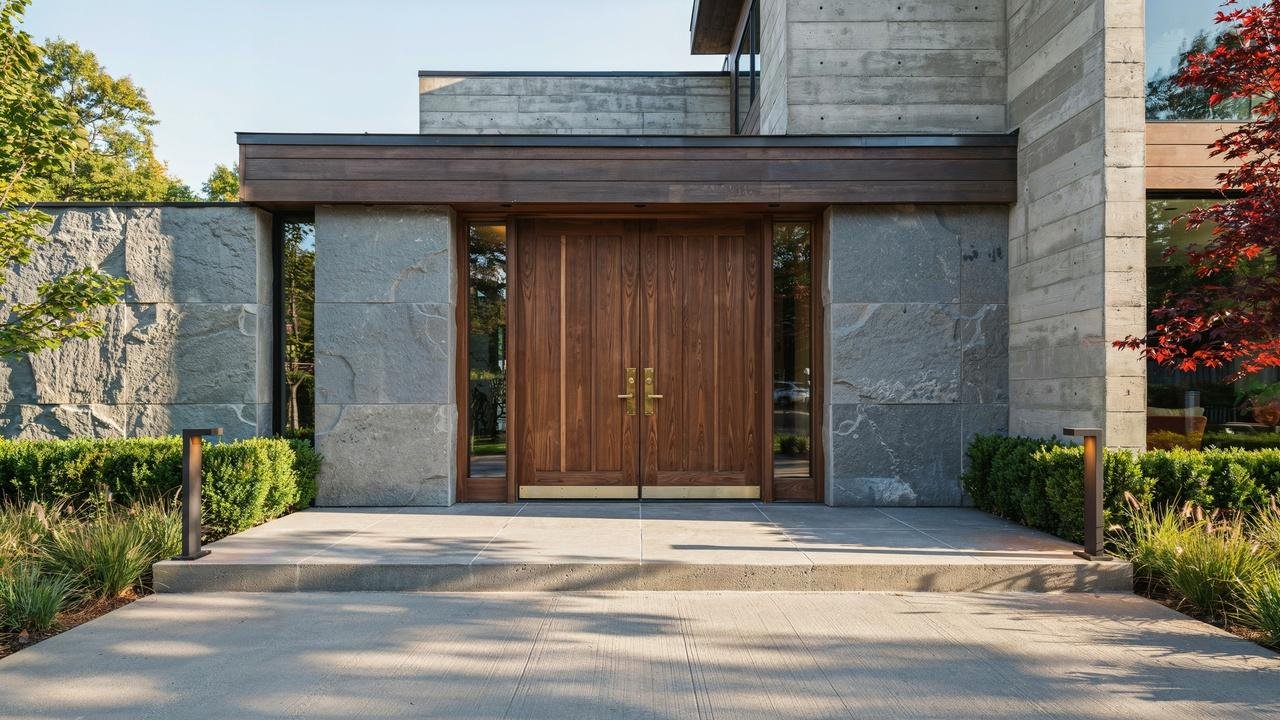
Double doors are two doors that sit side by side in one frame.
They can be made of wood, metal, or fiberglass, and they may or may not have glass panels. One side often stays fixed while the other swings open for daily use.
Double doors are common in front entryways, offices, and large interior openings where a wide passage is needed.
What Are French Doors?
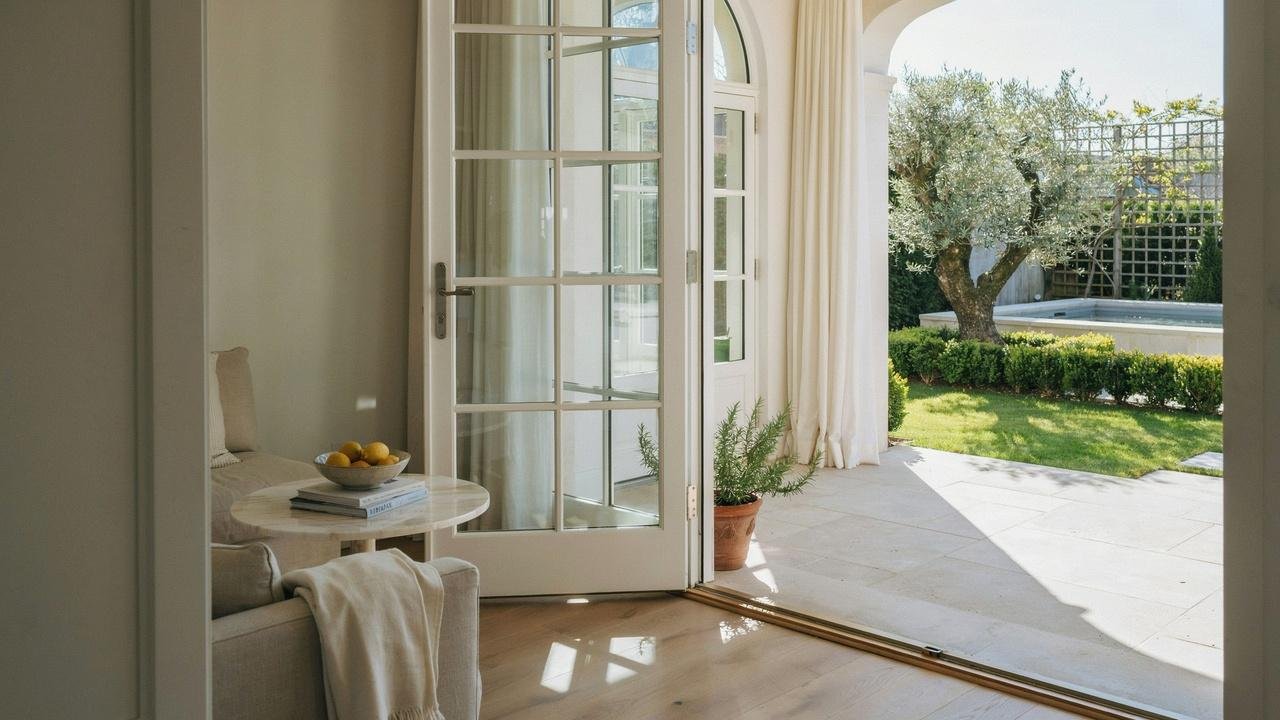
French doors are a pair of hinged doors made almost entirely of glass, framed by thin wood or metal strips.
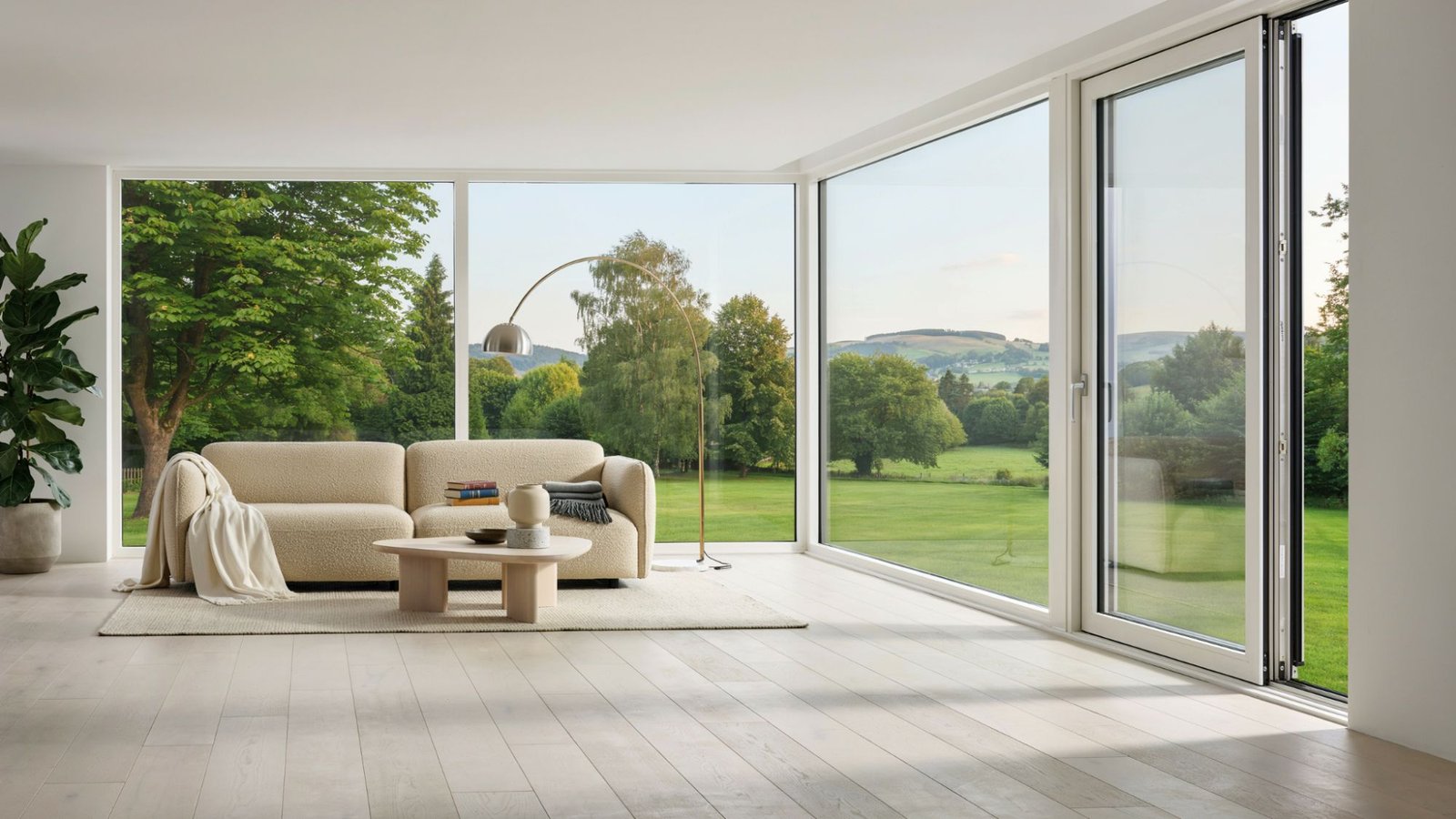
Both panels usually open outward or inward, and they are known for letting in lots of natural light.
They are often used for patios, balconies, and rooms that open to a garden or backyard view.
French Doors vs Double Doors: Key Differences
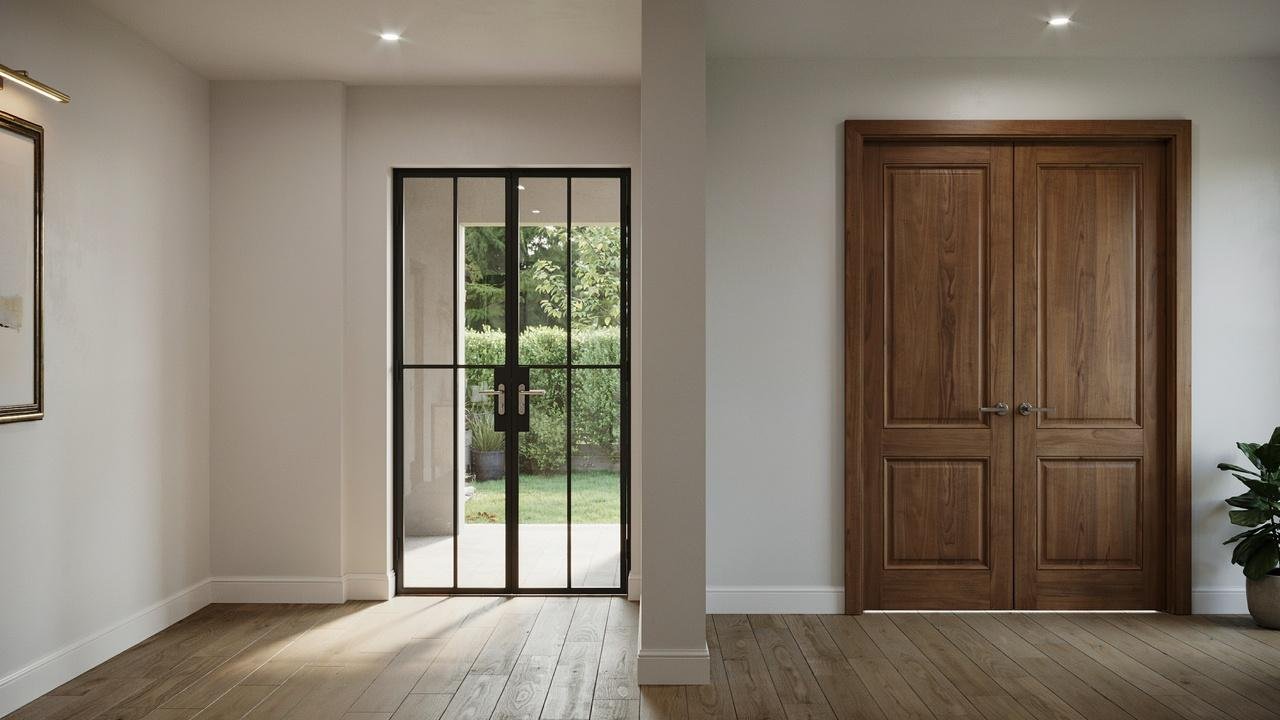
Here is how French doors and double doors differ in design, light, privacy, security, and upkeep.
| Feature | French Doors | Double Doors |
| Design and Construction | Mostly glass with slim frames | Solid panels, glass optional |
| Glass Panels and Visibility | Full or near full glass coverage | Limited or no glass |
| Opening Style | Both panels swing open together | One fixed, one active panel (often) |
| Natural Light and Views | Lets in maximum light and views | Limited light unless glass is added |
| Privacy Levels | Lower, due to glass | Higher, with solid panels |
| Security Features | Glass can be a weak point | Solid panels offer more resistance |
| Energy Efficiency | Lower unless double glazed | Higher with insulated panels |
| Maintenance Requirements | Frequent glass cleaning | Lower upkeep overall |
French Doors vs Double Doors: Side-by-Side Comparison
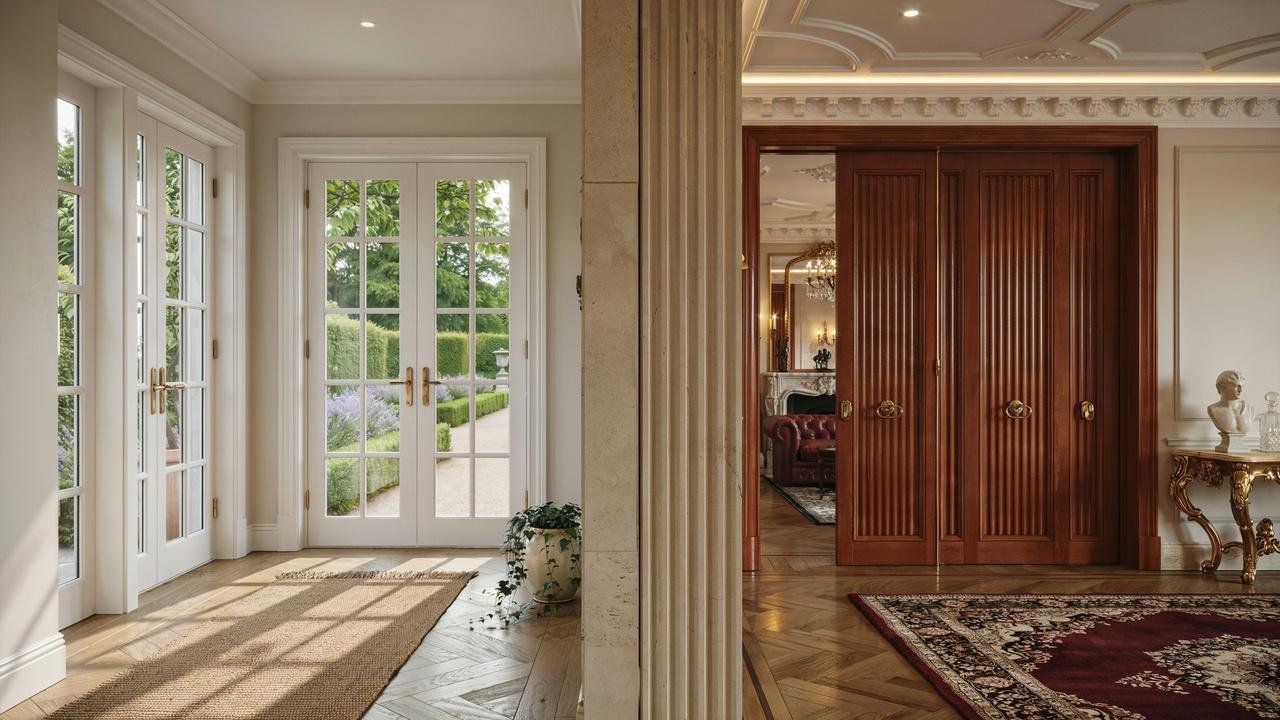
A quick side-by-side look at how French doors and double doors stack up across the features that matter most.
| Category | French Doors | Double Doors |
| Appearance | Bright, open, classic look | Bold, formal, heavy look |
| Glass Coverage | High | Low to none |
| Privacy | Lower | Higher |
| Security | Moderate | Higher |
| Light Transmission | High | Low |
| Cost | Higher on average | Lower on average |
| Maintenance | Higher (glass care) | Lower |
| Best Uses | Patios, gardens, dining rooms | Entryways, offices, commercial spaces |
Pros and Cons of French and Double Doors
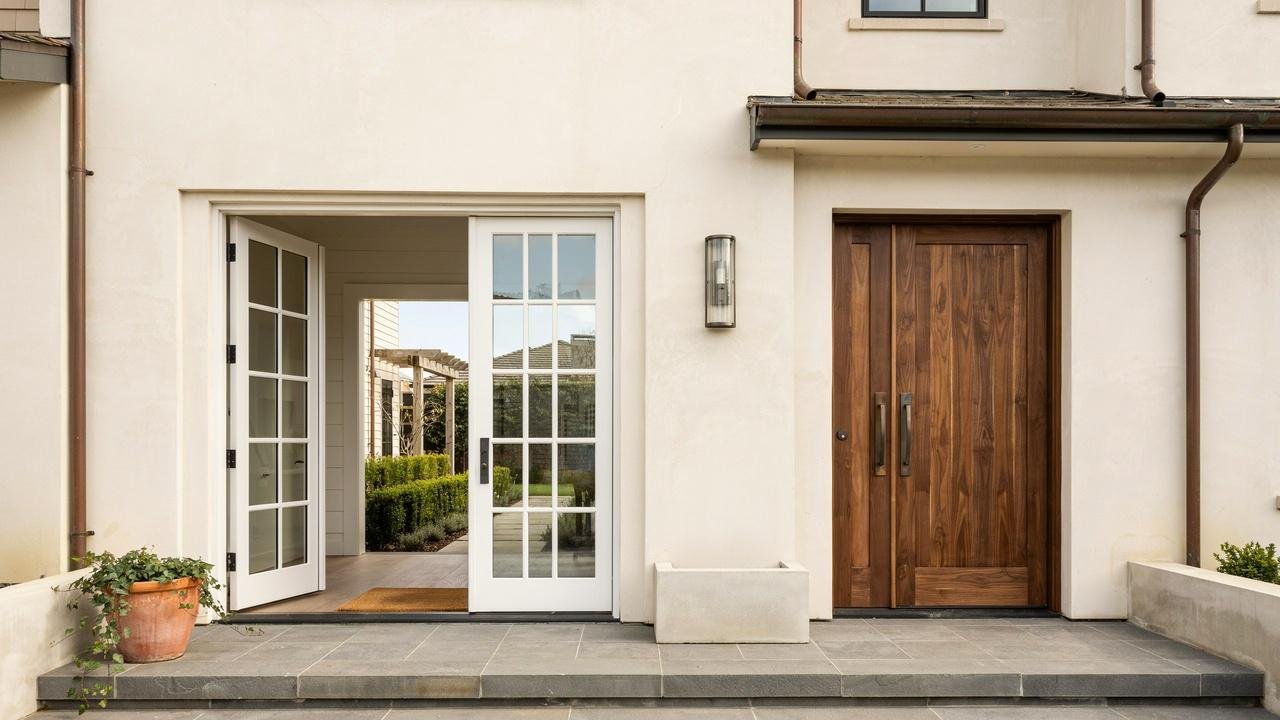
French Doors
French doors bring a bright, open feel to any room since their glass panels let in plenty of natural light and offer wide views of the outdoors.
They work well for patios, gardens, and rooms that feel small or closed in, since the glass makes the space look bigger than it is.
On the downside, that same glass lowers privacy and can be a weaker point for security unless reinforced.
French doors also cost more to install and need regular glass cleaning, plus they tend to be less energy efficient unless fitted with double glazing.
Double Doors
Double doors offer strong privacy and better security thanks to their solid panel build, making them a reliable choice for entryways and high traffic areas.
They generally cost less than French doors and need less upkeep over time, especially when made from durable materials like fiberglass.
The tradeoff is less natural light, since solid panels block outdoor views and can make a room feel heavier or more closed off.
They may also need more clearance space and are not the best fit for rooms facing a garden or backyard view.
Best Uses for French Doors
French doors work best in spaces that benefit from extra light, wide views, and easy outdoor access.
Patio and Garden Access
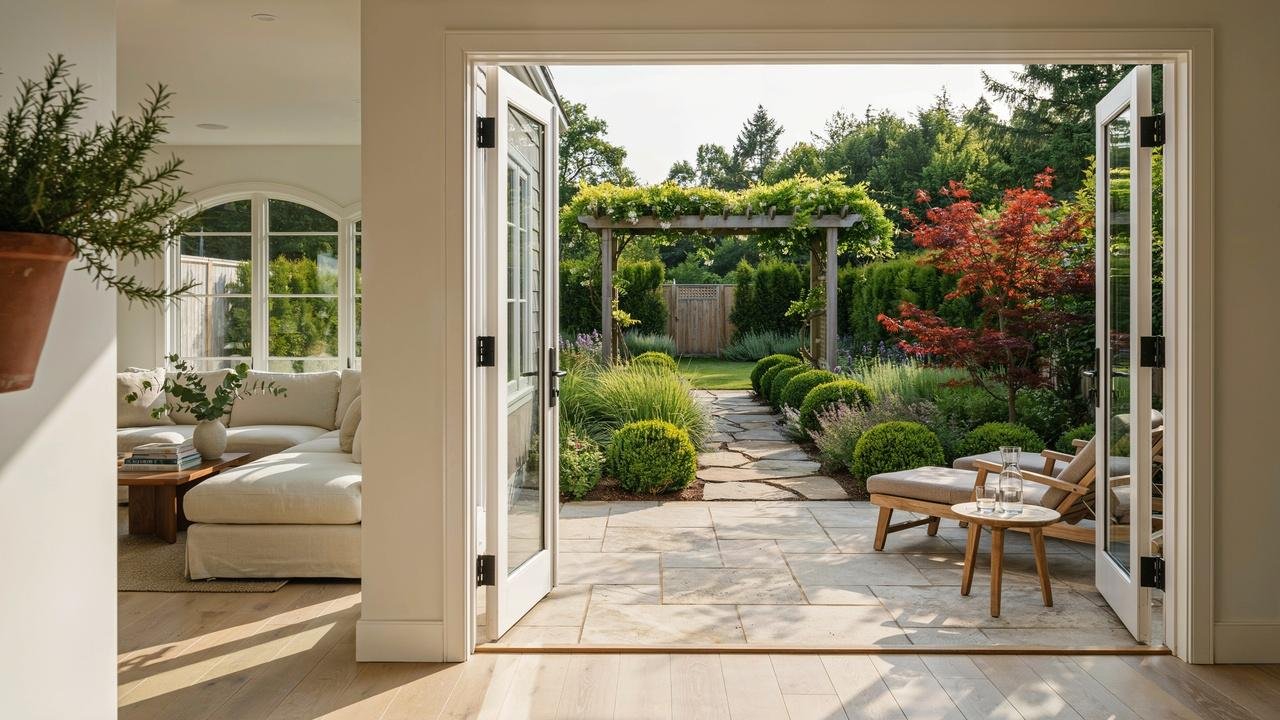
French doors open wide and give a clear path to the backyard, making them perfect for homes with patios or gardens.
Since both panels swing open at once, you get a full opening instead of a narrow walkway.
This makes it easier to carry furniture, grills, or planters outside without squeezing through a tight gap.
Homeowners with a deck or pool area often pick French doors for this reason, since the wide opening blends the indoor and outdoor space together.
Balconies and Terraces
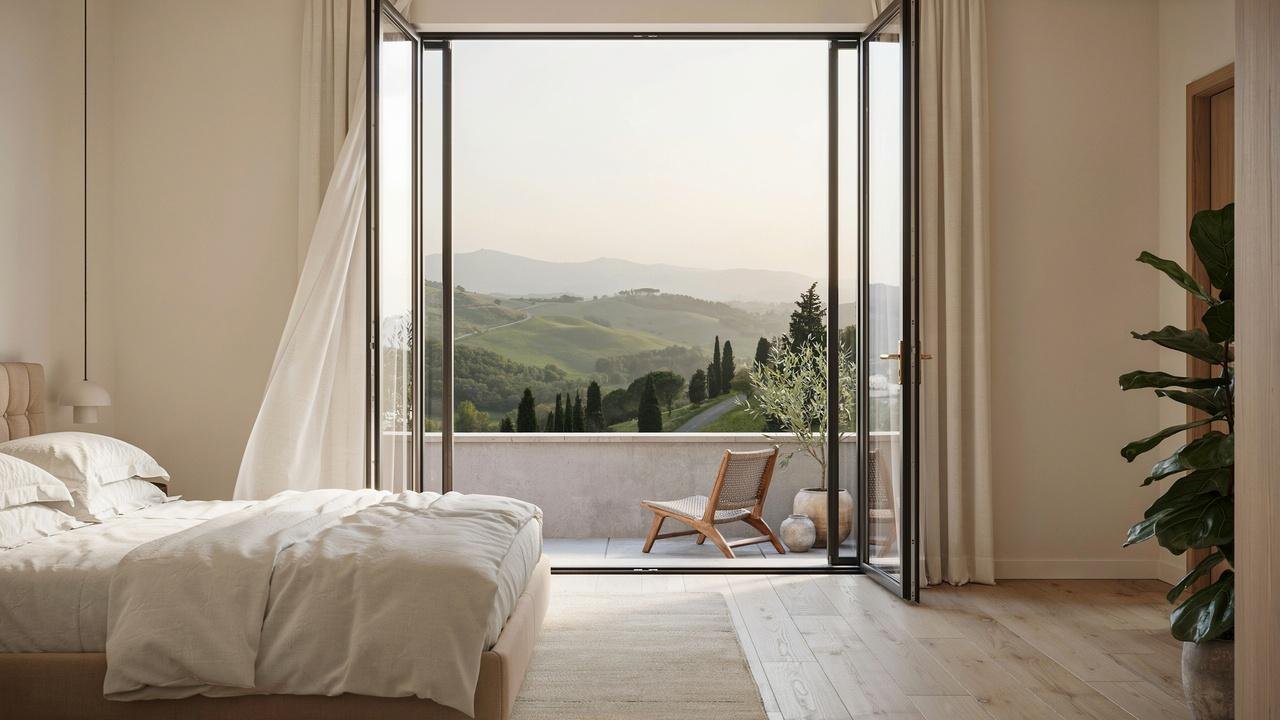
Their glass design pairs well with balconies, letting in views without blocking the scenery.
Even when closed, French doors keep the balcony visible from inside the room, so the space feels connected rather than shut off.
This works well in apartments or upper floor rooms where the view is part of the appeal.
Some homeowners add sheer curtains instead of blinds to keep light coming in while still getting some privacy at night.
Living Rooms and Dining Areas
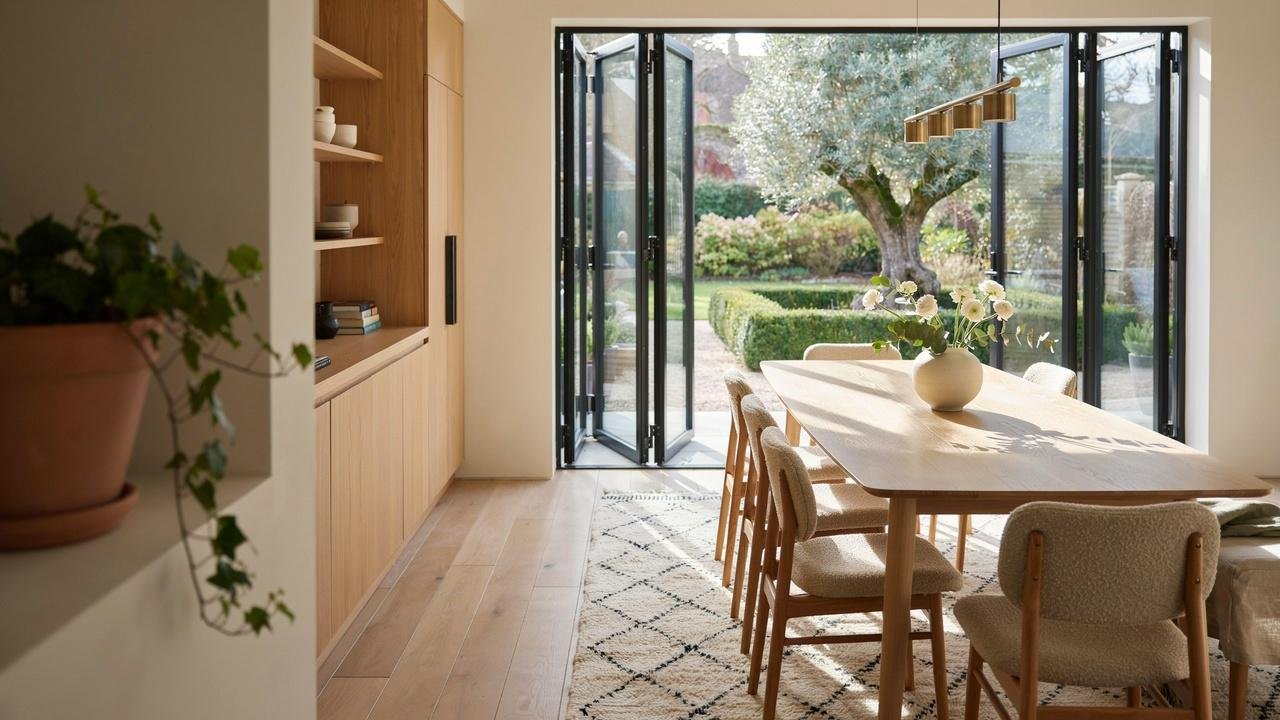
French doors add light and openness to rooms where families gather.
A dining room with French doors leading to a backyard or side patio feels bigger than it actually is, since the glass removes the visual barrier between inside and outside.
In living rooms, they also help during the day by cutting down on the need for artificial lighting, which can lower energy bills over time.
Home Offices
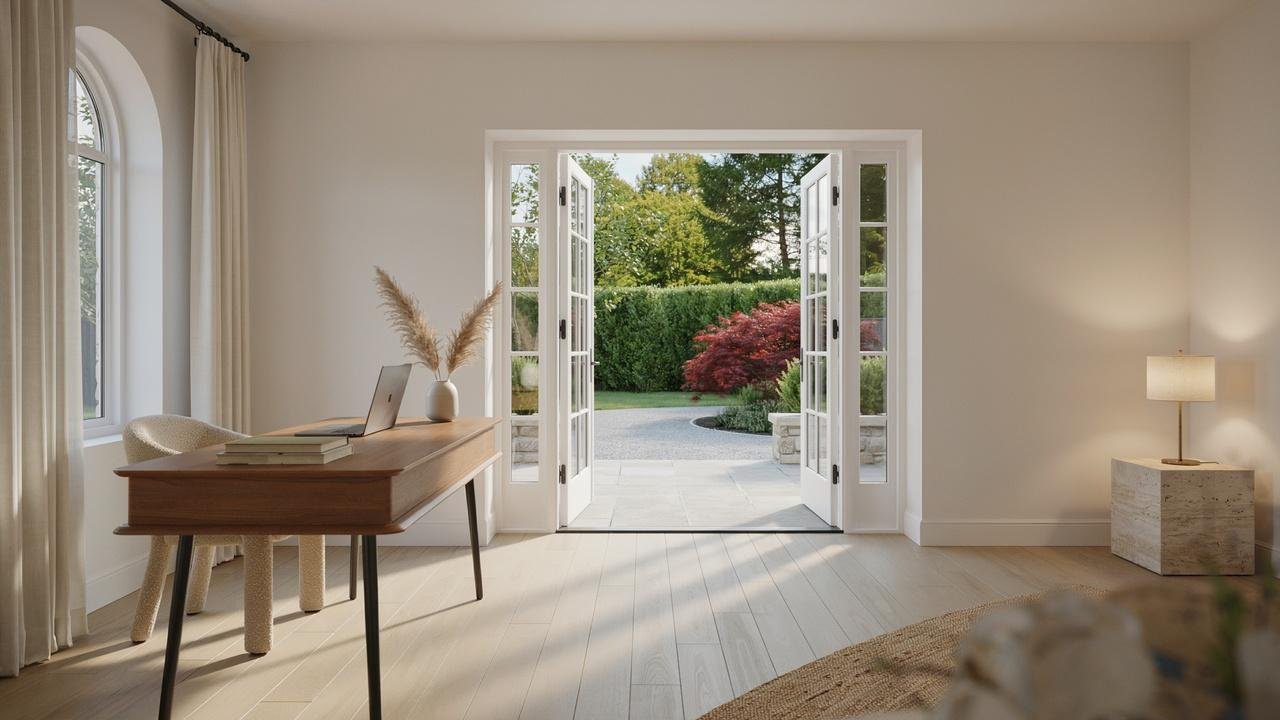
A glass door brings in natural light, which helps with focus during work hours.
Many people working from home now treat natural light as a top priority, since it reduces eye strain compared to overhead lighting.
French doors in a home office also offer a quick way to step outside for a short break without leaving through the main house entrance.
Best Uses for Double Doors
Double doors suit spaces that call for strength, privacy, and a bold, formal entrance.
Front Entryways
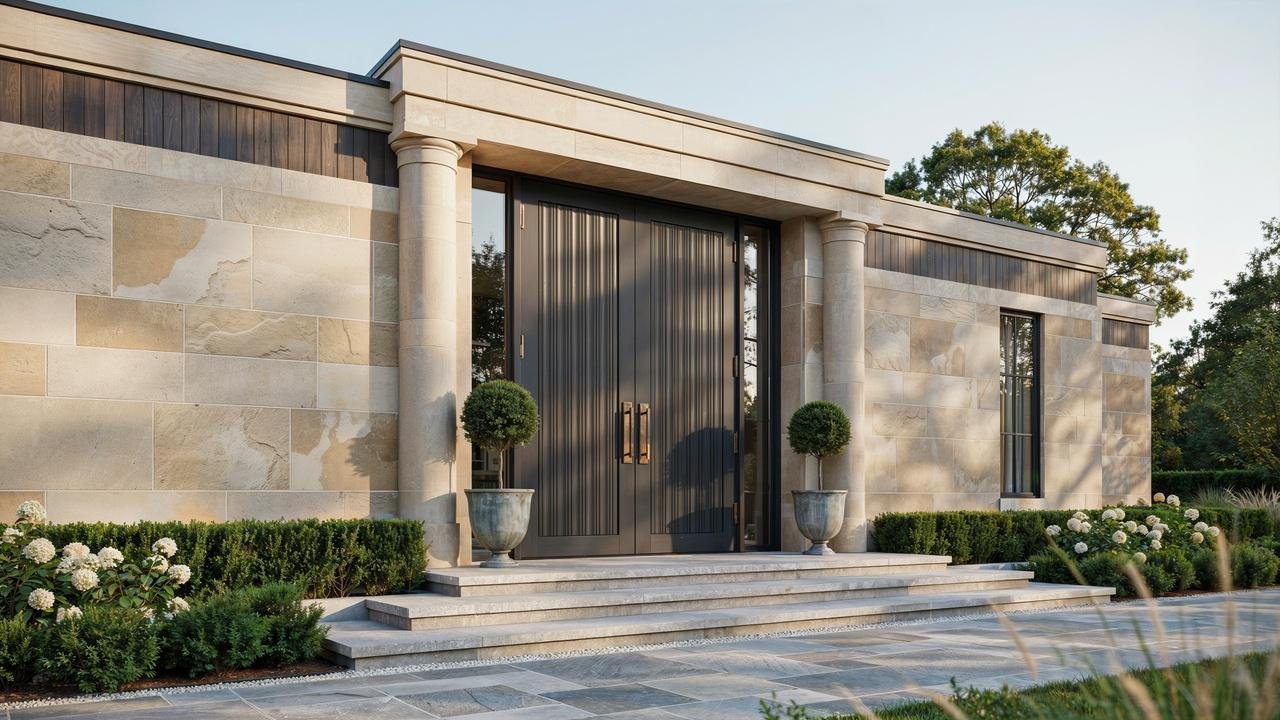
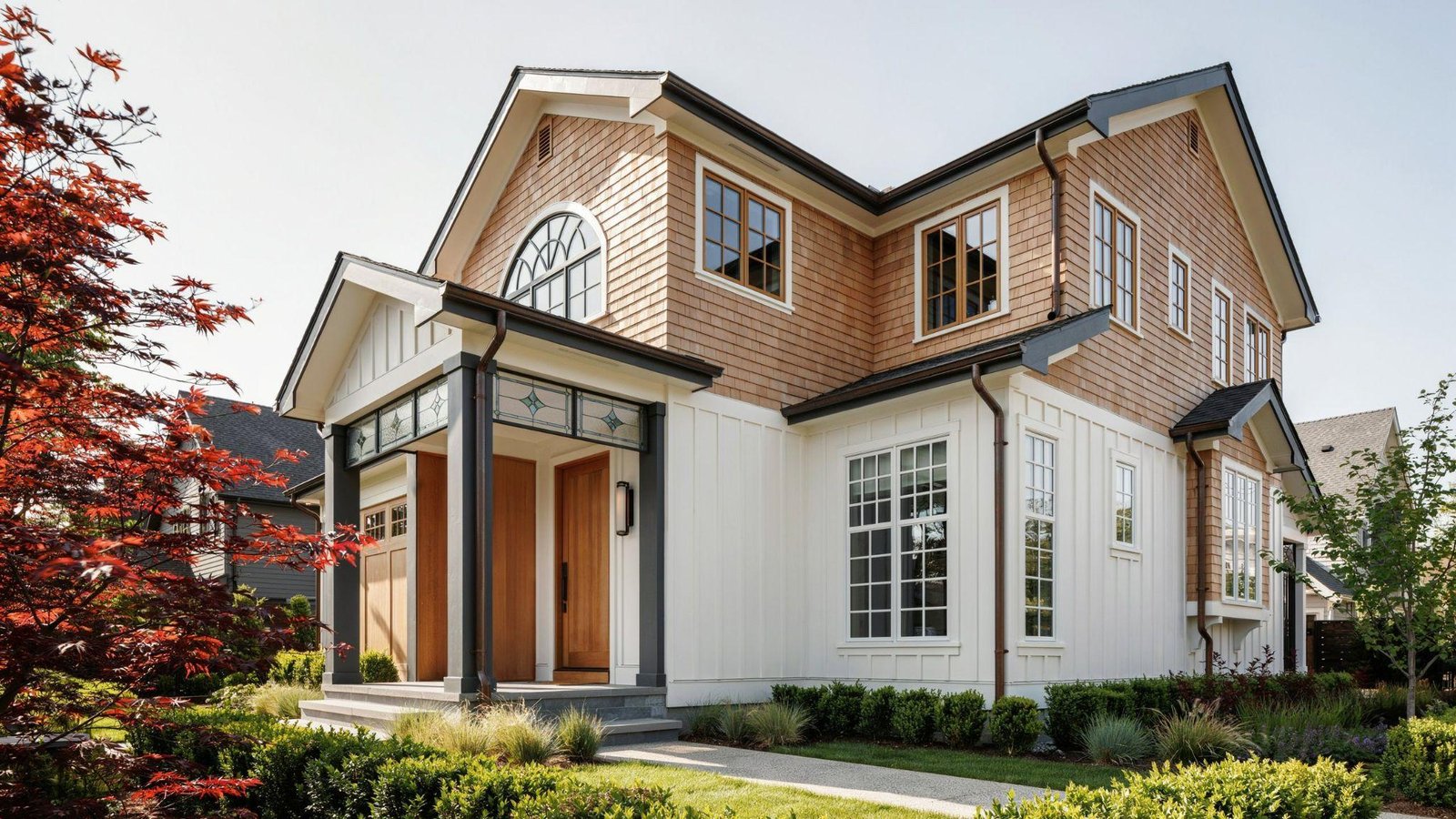
Double doors create a strong, welcoming first impression at the main entrance.
Their wide, solid look adds a sense of weight and security right at the front of the house, which many buyers and guests notice first.
They also handle heavier foot traffic well, since solid panels hold up better than glass against daily use, weather, and slamming.
Large Interior Openings
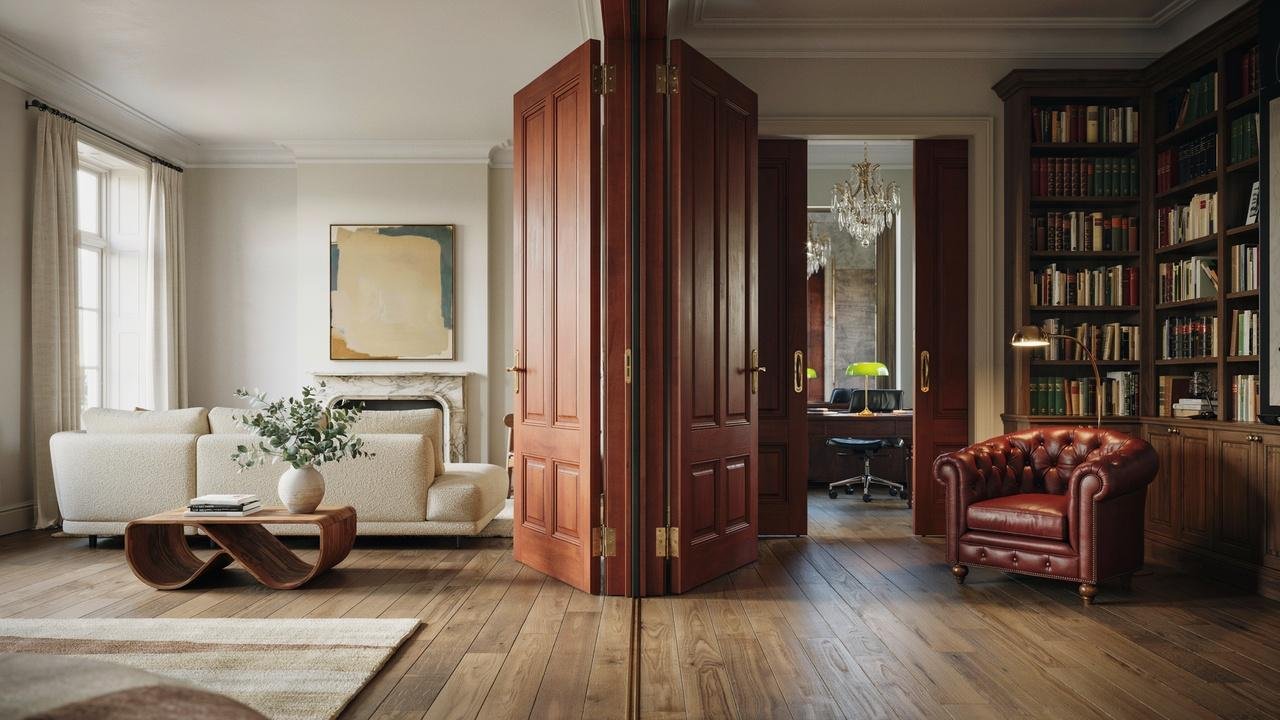
They suit wide hallways or rooms that need a grand passage point.
In homes with open floor plans, double doors can mark the transition between two large spaces, like a living room and a study, without fully closing them off when left open.
This gives flexibility for both open and closed layouts depending on the need.
Formal Spaces
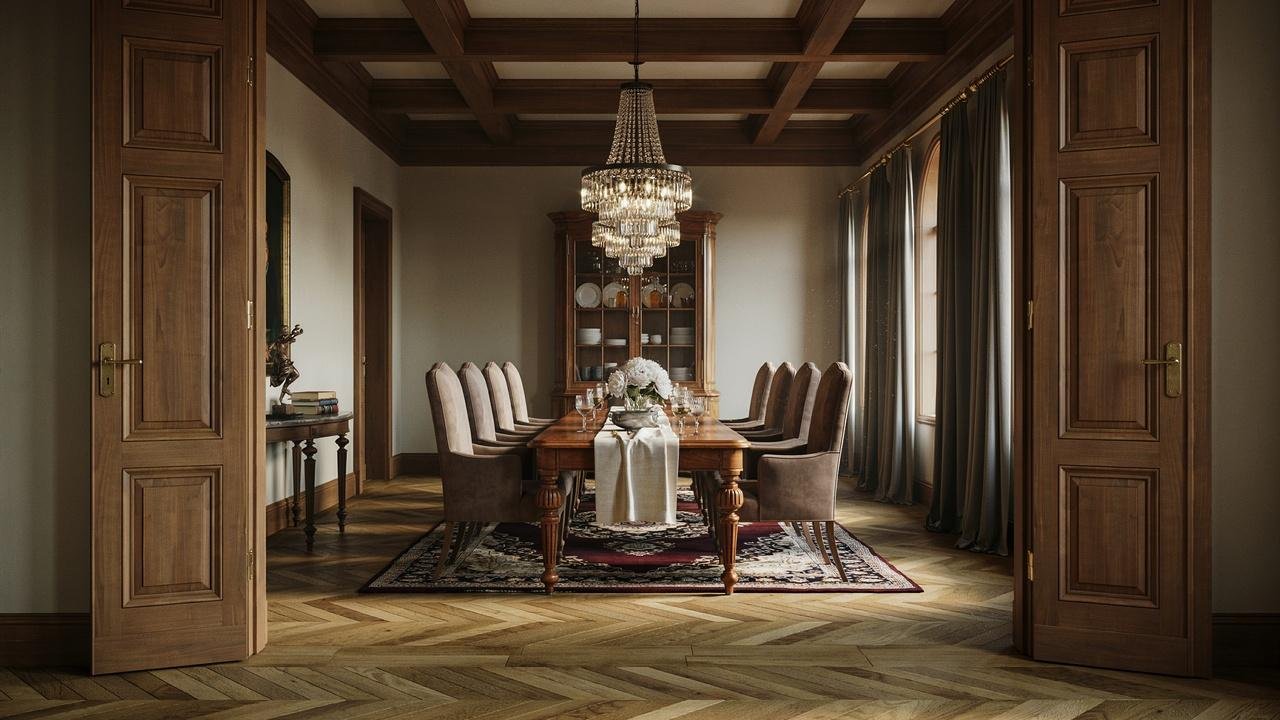
Double doors fit formal rooms like libraries or dining halls that call for a solid, structured look.
The heavier build and clean lines suit spaces meant to feel more serious or private, such as a home office, study, or formal dining room used mainly for guests and special occasions.
Commercial Applications
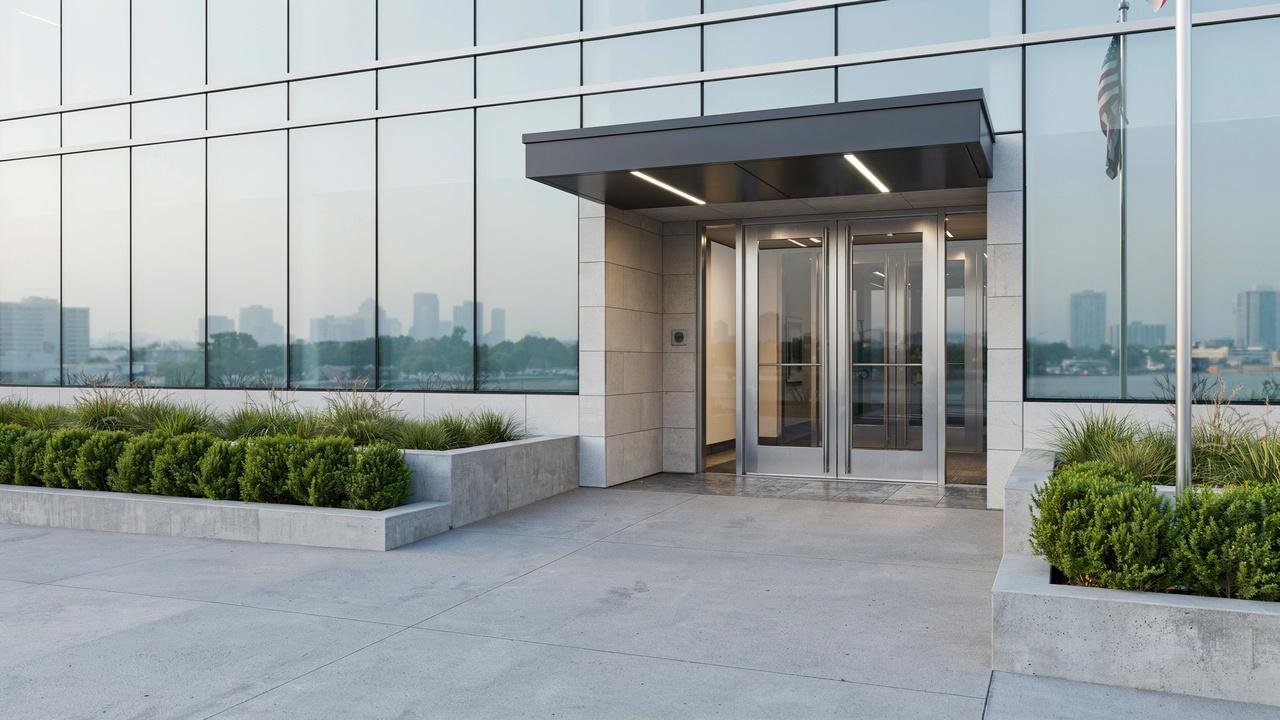
Offices and retail spaces often use double doors for durability and easy access.
In commercial settings, double doors hold up better under constant opening and closing, and they meet building codes for wider entry and exit points more easily than single doors.
Many businesses also use them at loading areas or back entrances where strength matters more than appearance.
Cost Comparison: French Doors vs Double Doors
Here is a quick breakdown of what affects pricing, installation, and upkeep costs for each door type.
Factors That Affect Pricing
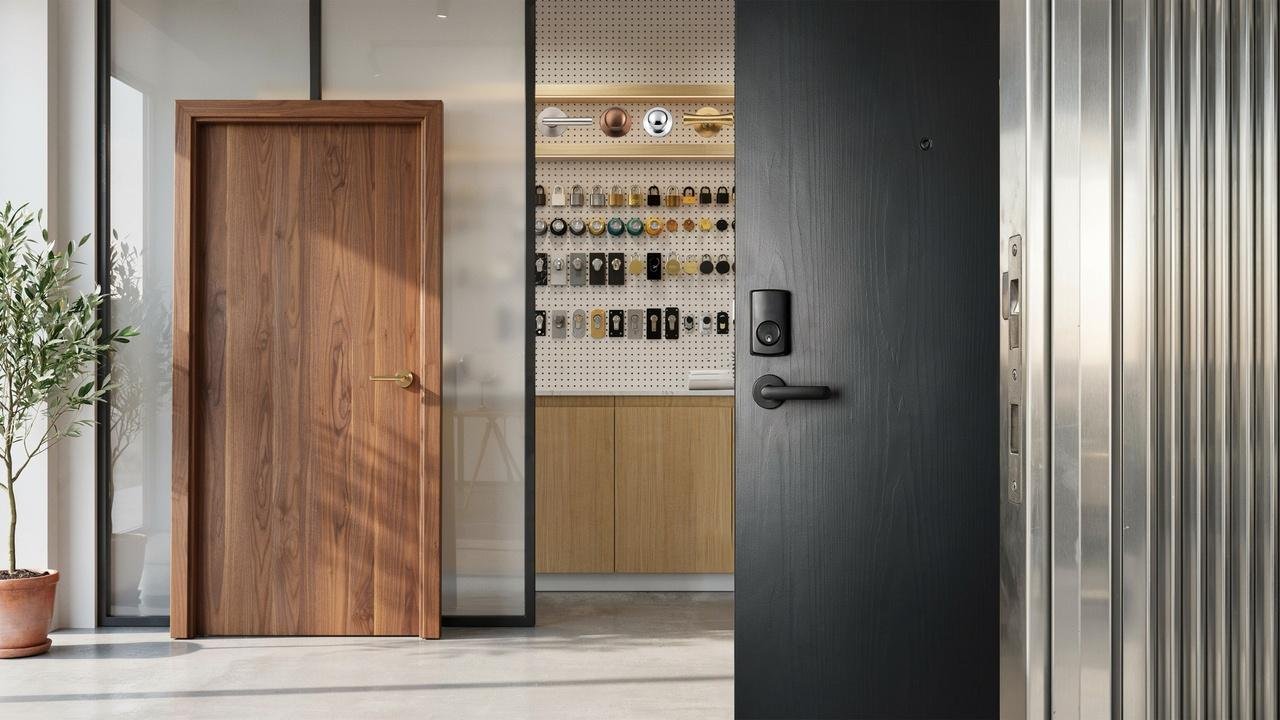
Material choice, glass type, hardware, and size all affect the final price of either door type.
Wood frames cost more than vinyl or fiberglass, and tempered or double glazed glass adds to the price of French doors.
Custom sizes, decorative grilles, and premium locks also push the total cost higher for either option.
Installation Costs
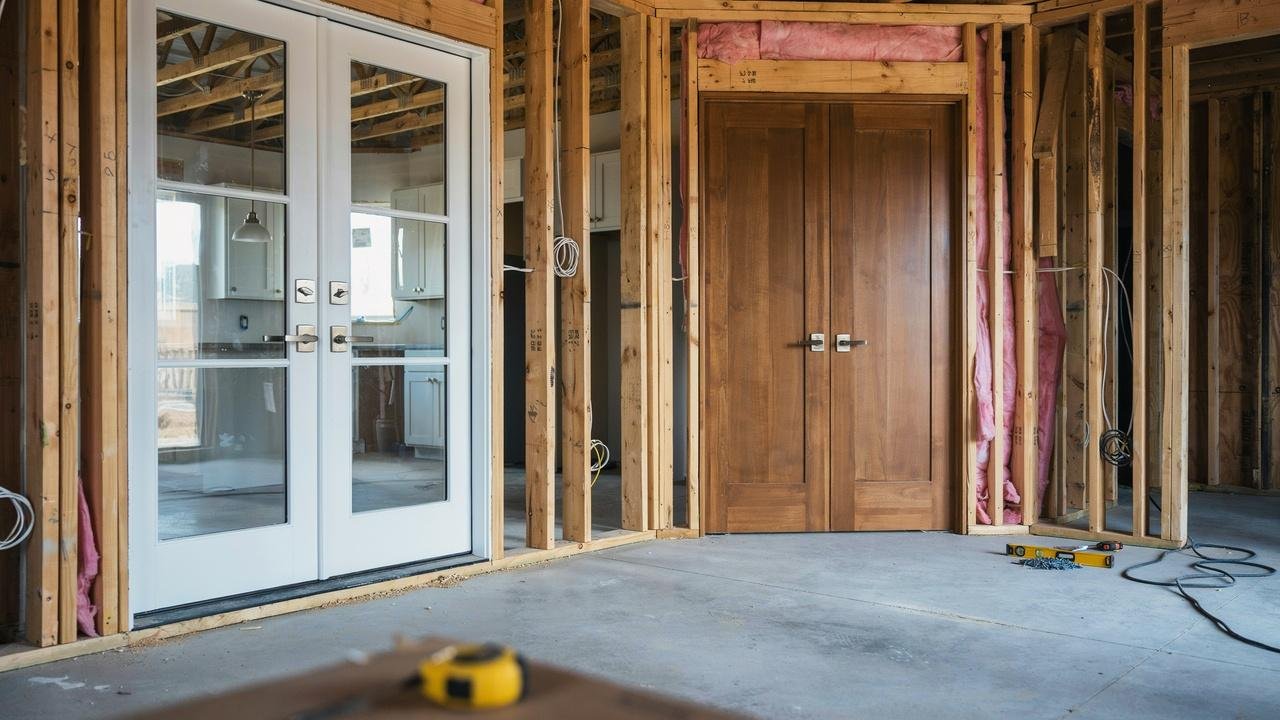
French doors generally cost more to install due to the glass and frame work involved.
Labor costs rise with the extra care needed to fit and seal glass panels properly.
Double doors are usually cheaper unless large glass panels are added, since solid panels are simpler and faster to install in a standard frame.
Long-Term Maintenance Costs
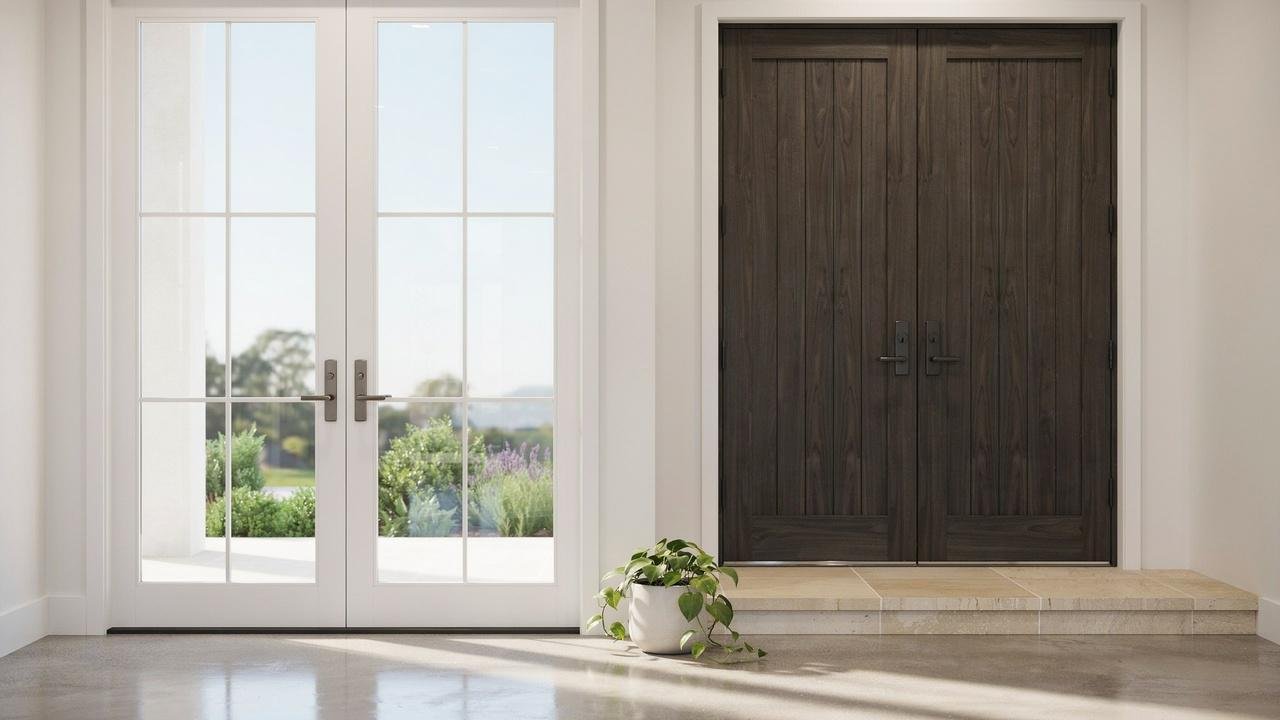
French doors need regular glass cleaning and occasional reseal work around the frame to stop drafts or leaks over time.
Double doors, especially solid wood or fiberglass types, need less frequent upkeep, though wood versions may need repainting or sealing every few years to prevent warping.
How to Choose Between French Doors and Double Doors
A simple guide to help you pick the right door based on style, privacy, light, space, and budget.
Consider Your Home's Architectural Style
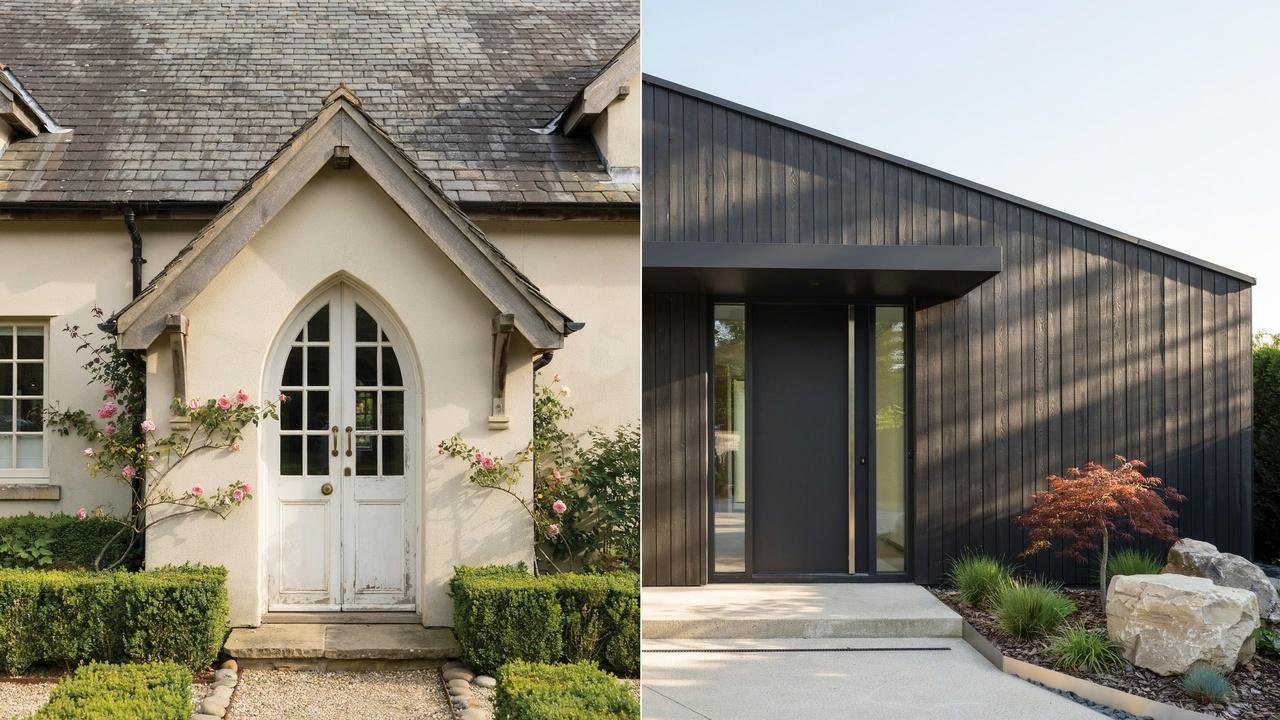
Match the door style to the rest of your home's design for a cohesive look.
A classic or cottage style home tends to suit French doors, while a more modern or formal home often looks better with solid double doors.
Evaluate Privacy and Security Needs
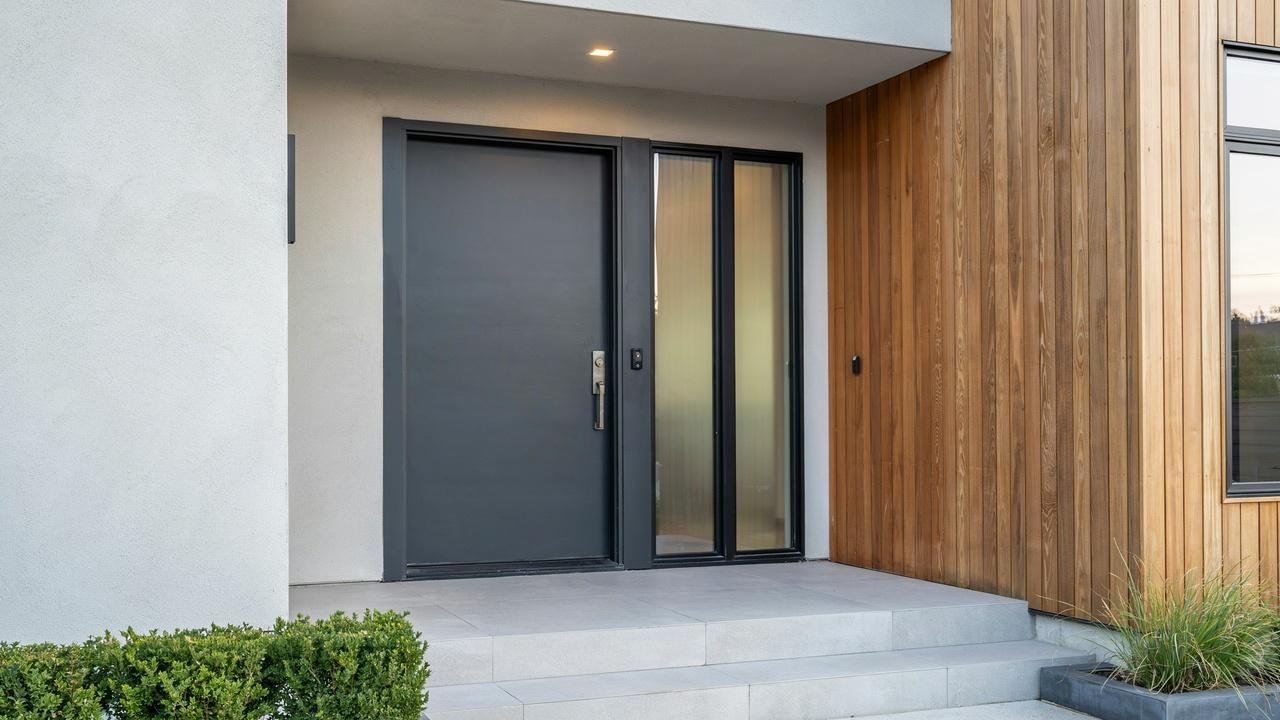
If privacy matters most, double doors with solid panels are the safer pick.
Homes facing a busy street or close neighbors may benefit more from the added privacy that solid panels provide compared to glass.
Think About Natural Light Requirements
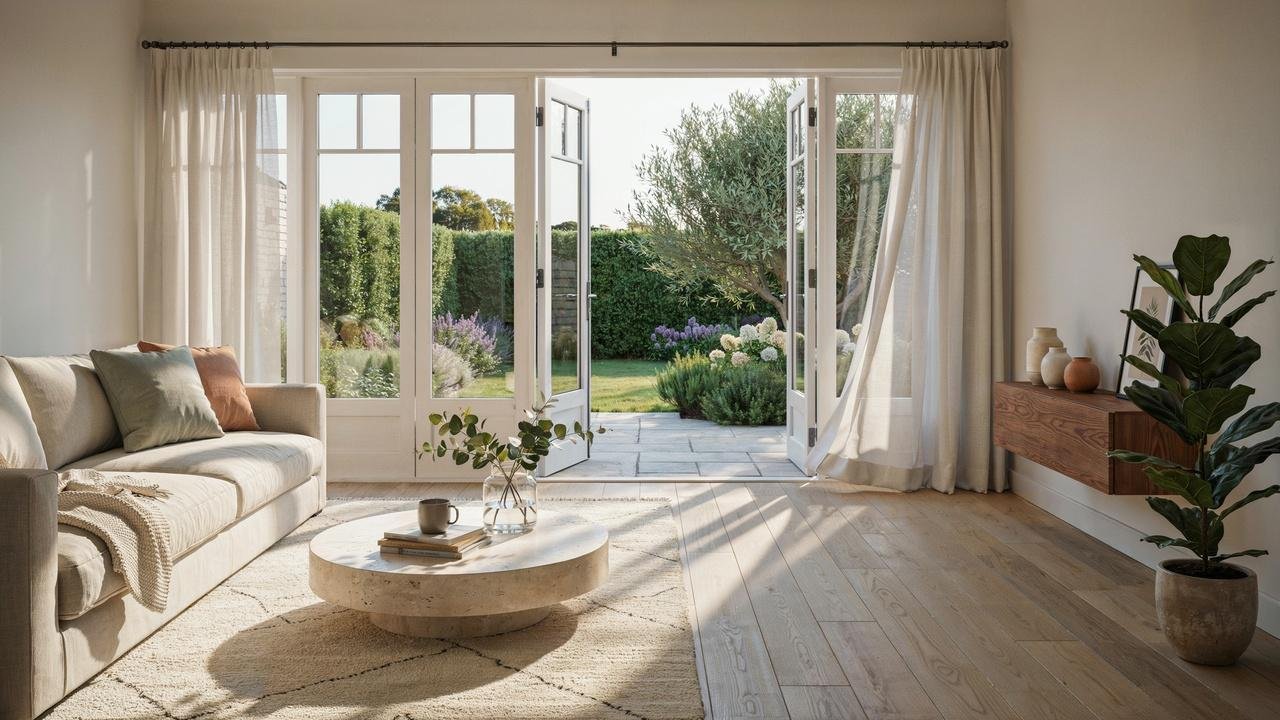
Rooms that need more sunlight benefit most from French doors.
North facing rooms or spaces that feel dark during the day often get a noticeable boost in brightness once glass doors are added.
Assess Available Space
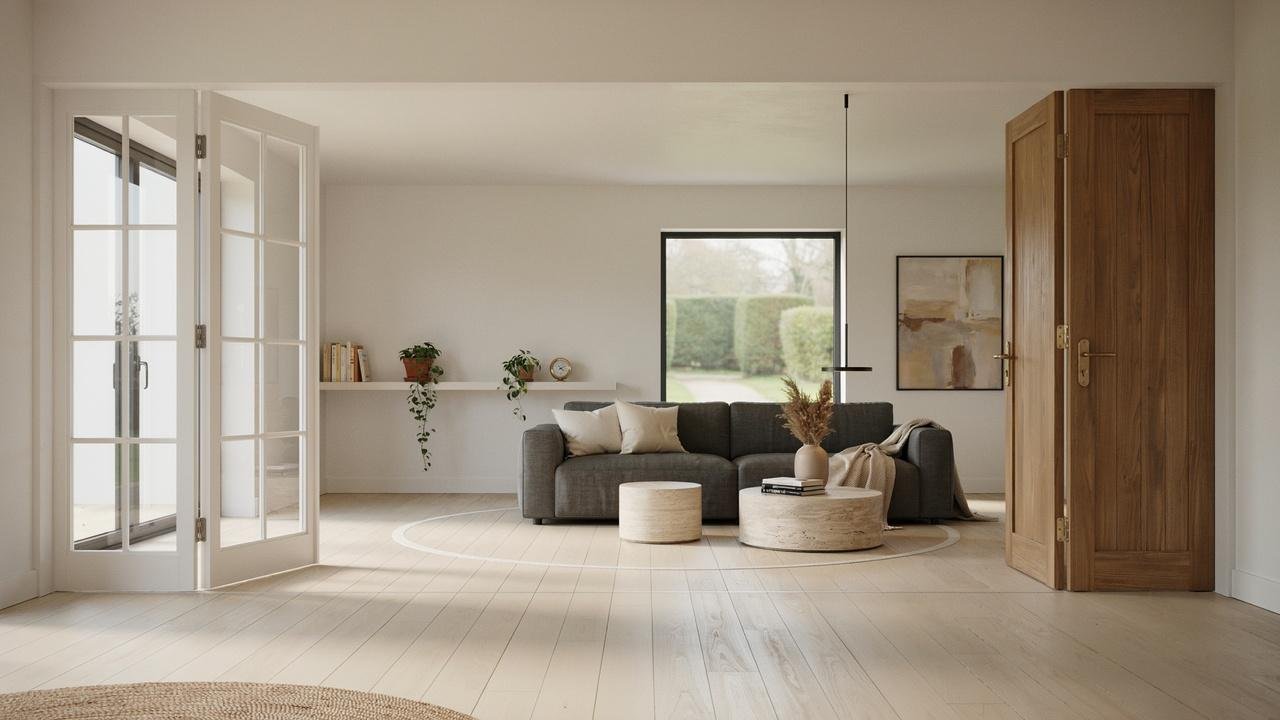
Check clearance space, since French doors need room to swing both panels open.
Double doors can work in tighter spots if one panel stays fixed, since only one side needs to swing freely.
Compare Your Budget
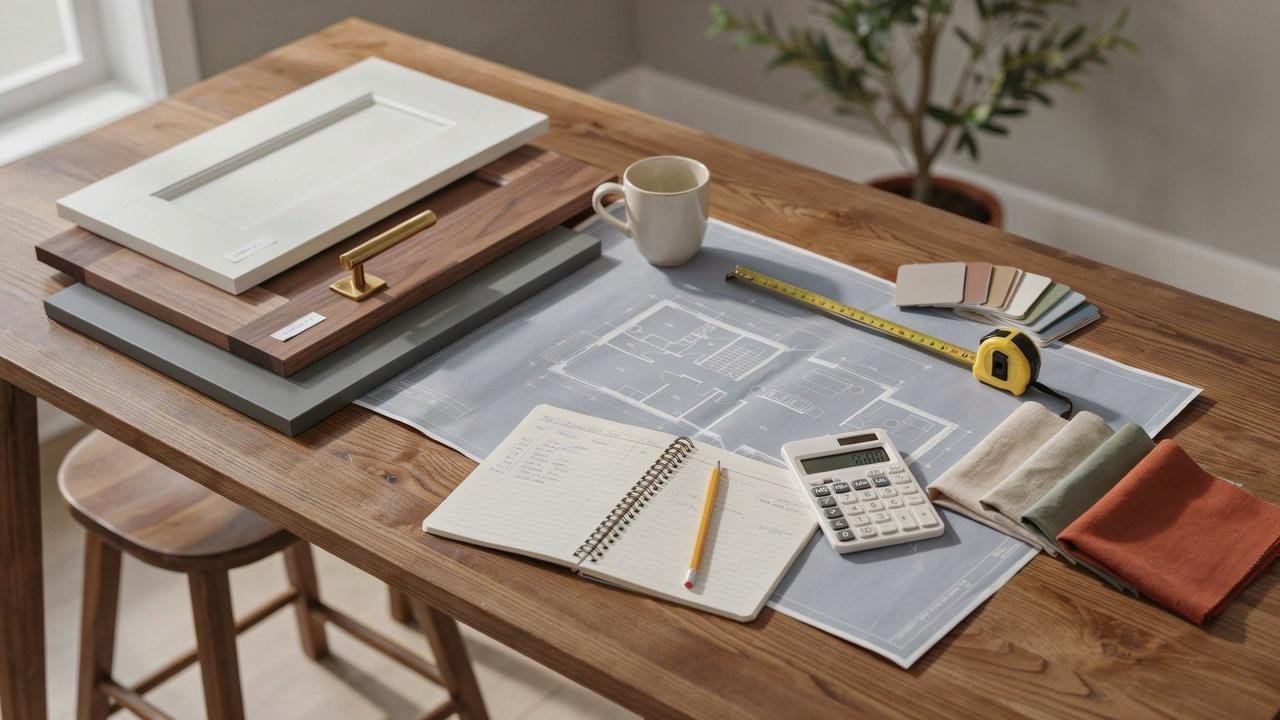
Double doors tend to fit tighter budgets, while French doors may cost more upfront.
Factor in both installation and long-term upkeep costs before deciding, since the cheaper option today is not always the cheaper option over several years.
Common Misconceptions About French Doors and Double Doors
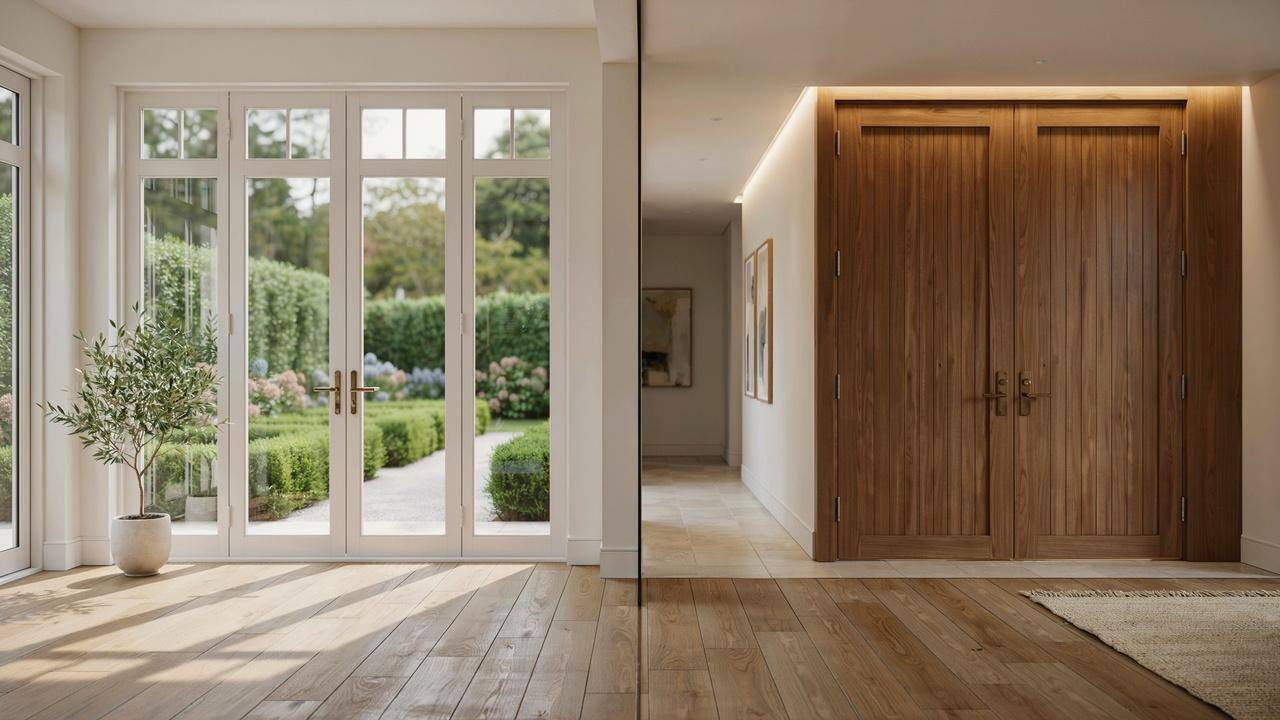
Clearing up a few myths about how French doors and double doors actually work.
Are All French Doors Double Doors?
Not always. Some French doors have only one active panel, while the other stays fixed in place.
This means the door technically counts as a single operating panel even though it visually looks like a pair.
Are French Doors Less Secure?
Not necessarily. With reinforced glass and strong locks, French doors can be just as secure as double doors.
Multi point locking systems and laminated glass have closed most of the security gap that older French doors used to have.
Do Double Doors Always Have Two Active Panels?
No. Many double doors have one fixed side and one active side that opens for daily use.
This design is common because it reduces wear on hardware and keeps the doorway easier to seal against drafts.
Tips for Choosing the Right Door Style
A few quick pointers to help you pick a door that fits your home and lasts for years.
- Match the door style to your home's existing design
- Choose energy-efficient glass or insulated panels
- Think about how much daily foot traffic the door will handle
- Pick strong, reliable hardware and locks
- Plan ahead for long-term maintenance needs
Conclusion
Choosing between French doors and double doors comes down to what matters most to you:light, privacy, security, or budget.
I always tell homeowners to walk through their daily routine first, since that tells you more than any spec sheet.
Picture your mornings, your guests, your view. Once you do that, the right door usually picks itself.
Got a door dilemma of your own? Drop a comment below, share this with a friend who is renovating, or check out our other home guides.
Frequently Asked Questions
What Is the Main Difference Between French Doors and Double Doors?
French doors are mostly glass and let in lots of light. Double doors are usually solid panels built for strength and privacy.
Are French Doors More Expensive Than Double Doors?
Yes, in most cases. The glass and frame work in French doors adds to material and installation costs.
Which Option Provides Better Security?
Double doors typically offer better security due to their solid build. French doors can match this with reinforced glass and strong locks.
Can Double Doors Include Glass Panels?
Yes. Some double doors include small glass panels for added light while keeping most of the panel solid.
Which Door Style Lets in More Natural Light?
French doors let in far more natural light thanks to their full or near full glass design.