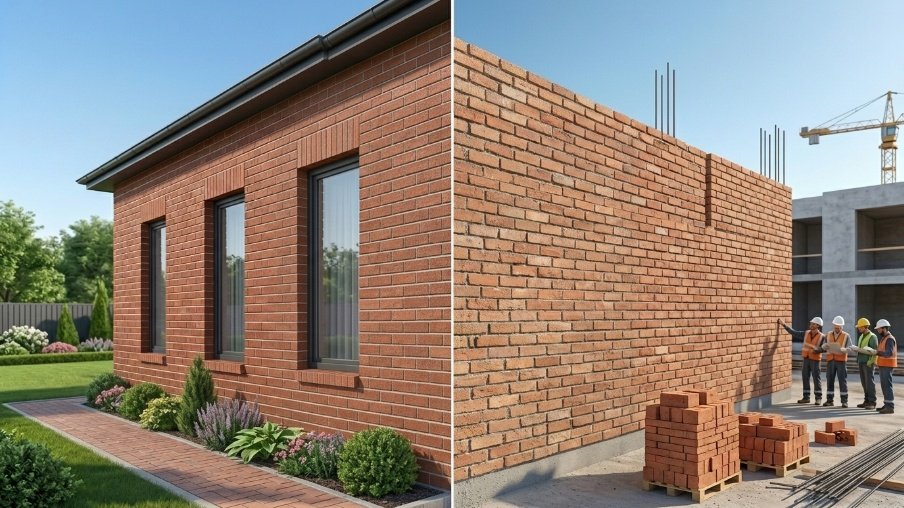
Choosing between face brick vs common brick can feel confusing when planning any construction project.
Many people search for clear answers about appearance, strength, finish, and real use cases. In this article, I will solve that problem in a simple way so you can make the right choice with confidence.
I will cover what face bricks and common bricks are, their key differences, uses, pros and cons, and which one suits your needs best.
This guide matches your search intent by focusing on practical, real-world understanding rather than complex terms.
From practical site experience, small choices in bricks can change the final look and durability of a structure.
What is a Face Brick?
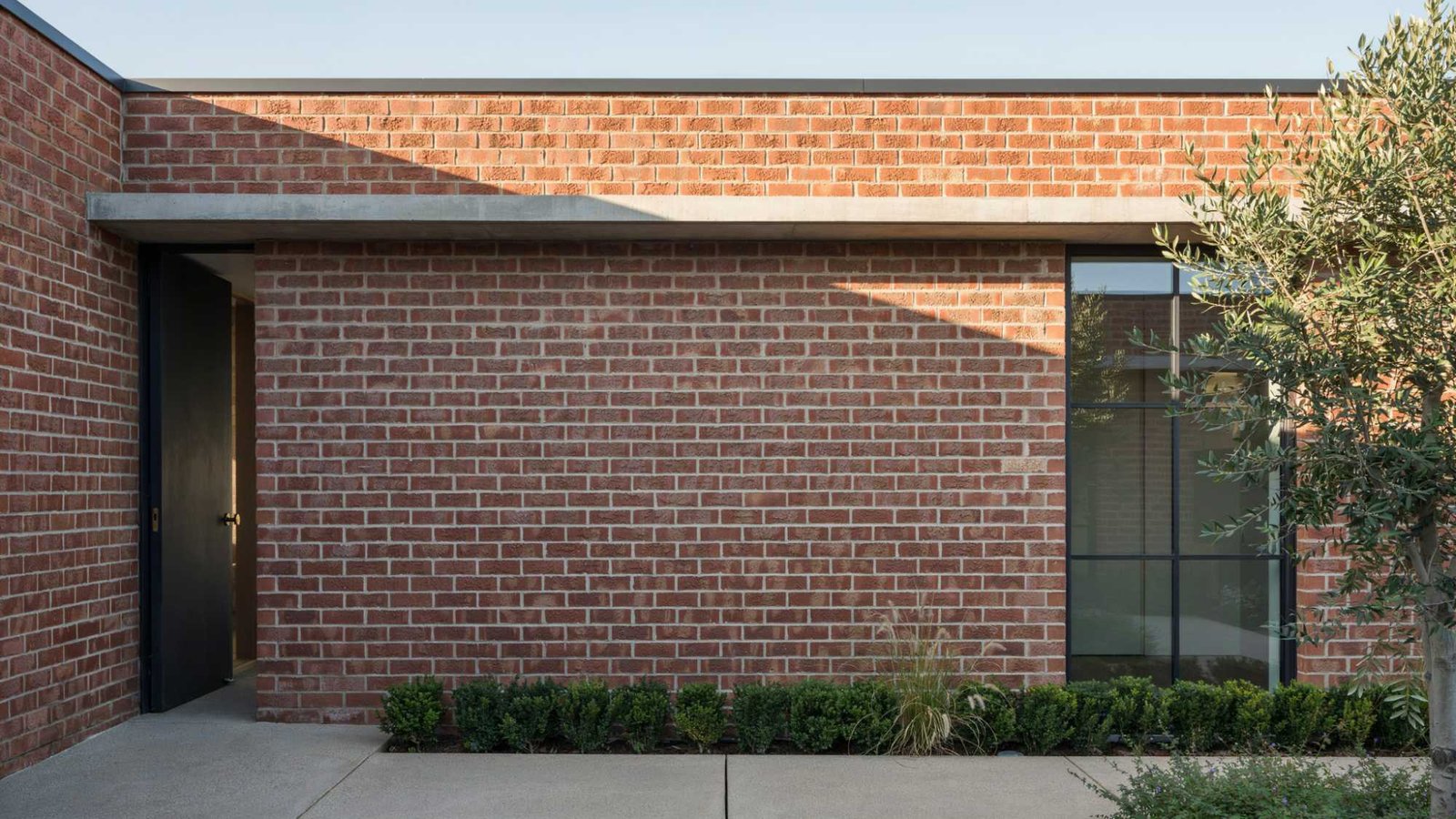
A face brick is a type of brick mainly used where appearance matters most. It is designed with a clean and finished look, so it can stay visible without plaster or extra coating.
The main purpose of face bricks is not only strength but also visual appeal and durability.
These bricks usually have a smooth surface, uniform shape, and consistent color. This makes walls look neat and attractive.
Because of their finish quality, they are often chosen for front-facing or decorative areas.
Face bricks are commonly used in exterior walls, boundary walls, garden walls, and other visible parts of a building. They are made to handle weather while keeping their look intact for years.
What is a Common Brick?
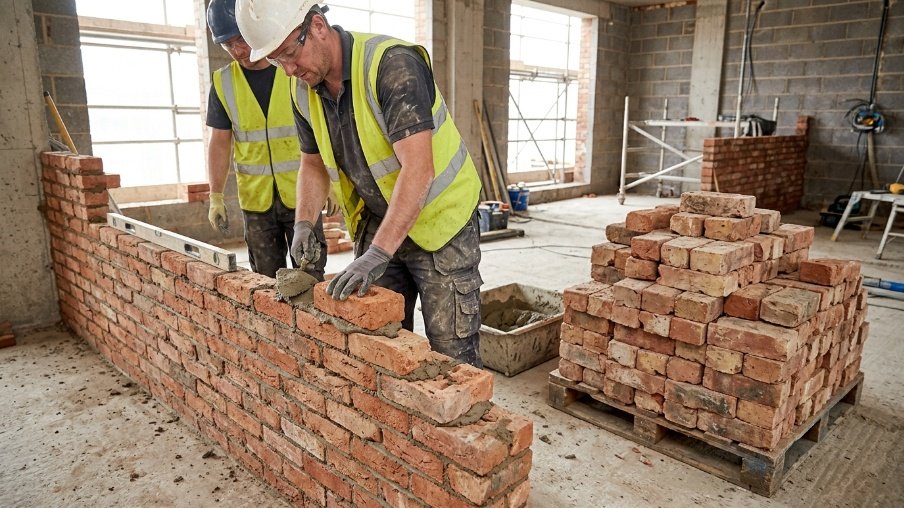
A common brick is a basic construction brick used mainly for structural work rather than appearance.
Its main purpose is strength and support, not finishing. That is why it is usually covered with plaster or other materials after construction.
These bricks have a rough surface, uneven edges, and less consistent color. Their focus is function over looks, making them more practical and affordable for large construction work.
Common bricks are widely used in internal walls, foundations, and hidden masonry work. They are strong enough for building support but are not meant for direct exposure or decorative use.
Key Differences Between Face Brick and Common Brick
Face brick and common brick differ mainly in look, strength, cost, and usage.
1. Appearance & Finish
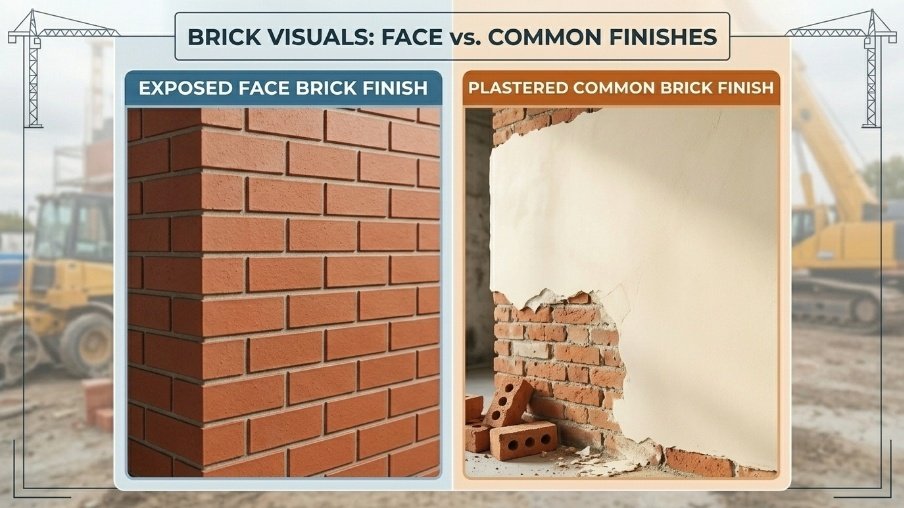
Face bricks have a smooth, uniform, and clean finish that gives walls a neat and attractive look. They are designed for visible surfaces and do not usually need plaster.
Common bricks, on the other hand, have a rough, uneven texture and less consistent shape. They are mainly used where appearance does not matter.
2. Strength & Durability
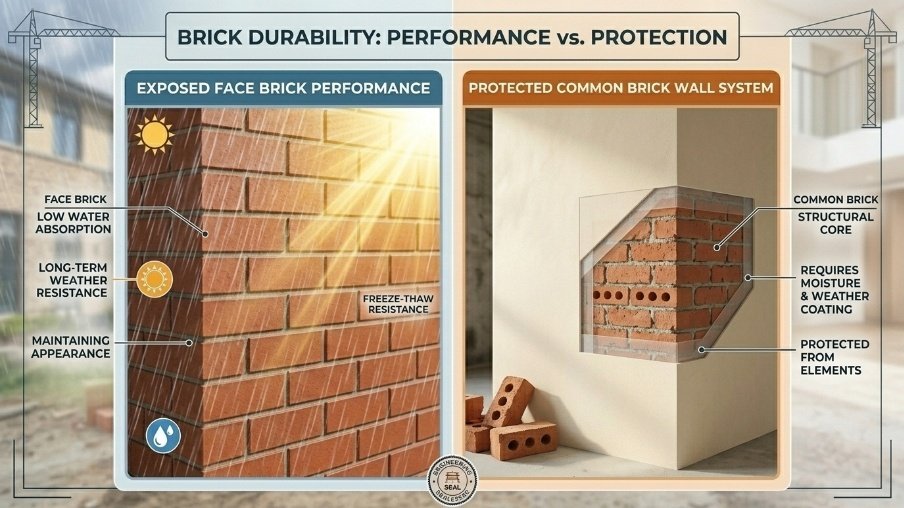
Face bricks offer good strength along with weather resistance, making them suitable for exposed walls. They maintain their look even under harsh conditions.
Common bricks are strong enough for structural support but are not designed for exposure. They perform well inside walls or hidden areas where finishing is added later.
3. Cost Comparison
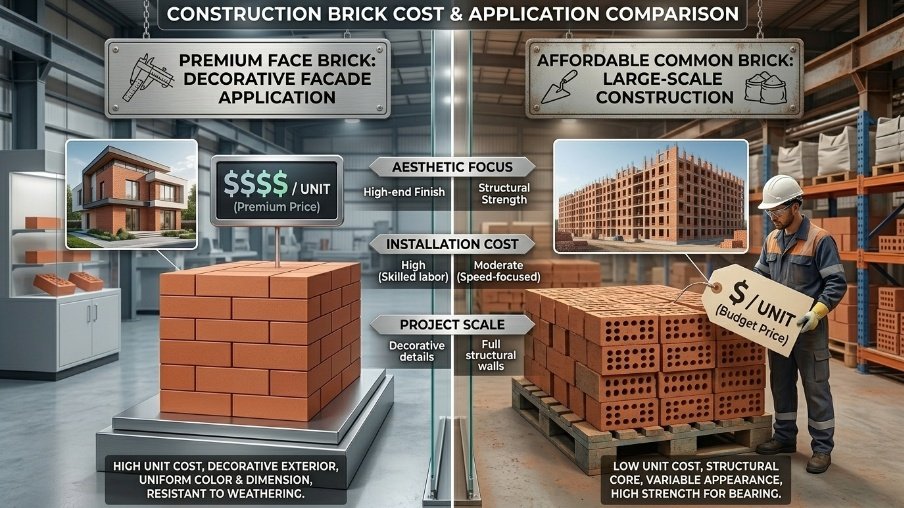
Face bricks are more expensive because of their better finish, quality control, and aesthetic value. They are often used in premium or visible construction areas.
Common bricks are budget-friendly and widely used in large-scale construction. Their lower cost makes them ideal for internal and non-visible structural work.
4. Manufacturing Quality
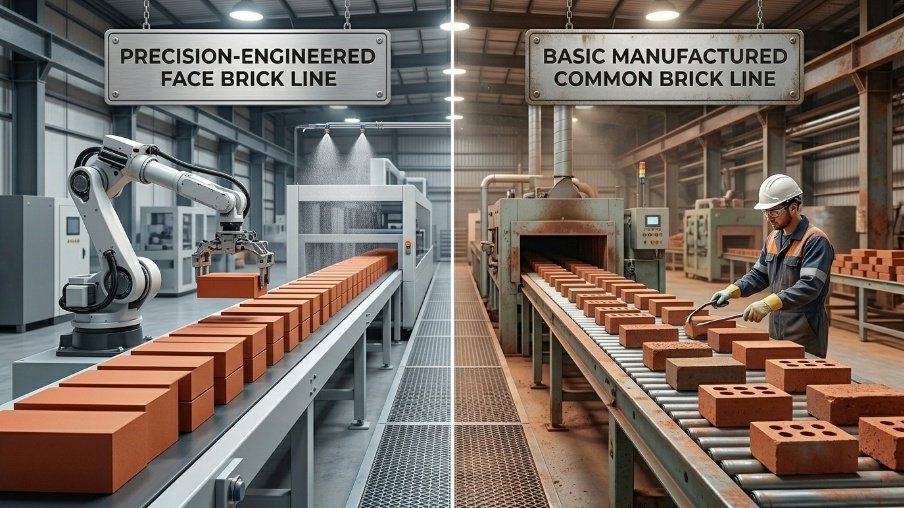
Face bricks are produced with higher precision, ensuring uniform size, shape, and color consistency. This improves the overall appearance of the structure.
Common bricks are made with basic manufacturing standards, so slight variations in size and color are common. Their focus is more on function than visual quality.
5. Water Resistance & Weather Exposure

Face bricks are more resistant to water and weather changes, making them suitable for exterior use. They help protect buildings while maintaining appearance.
Common bricks absorb more moisture and usually require plaster or coating for protection. They are best used in covered or internal areas.
Uses of Face Bricks and Common Bricks
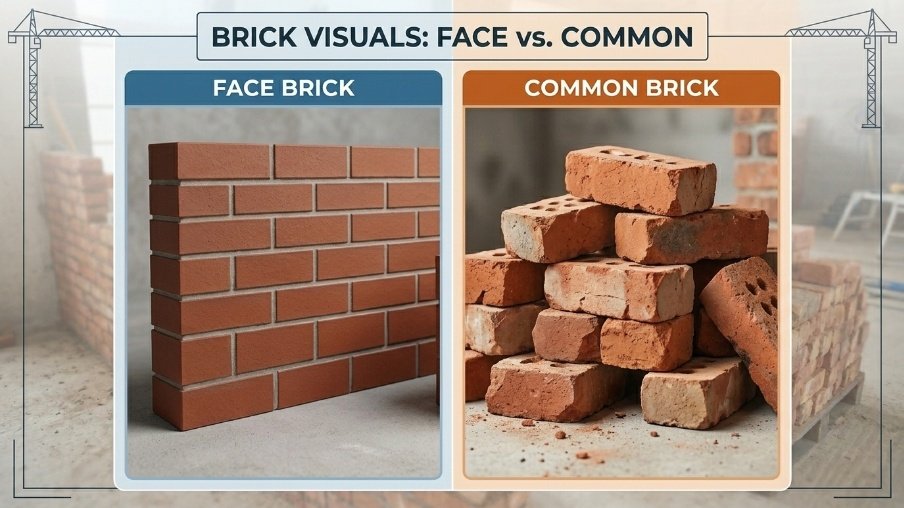
Face bricks are mainly used where appearance matters, while common bricks are used for hidden or structural work where strength is more important than finish.
Uses of Face Bricks
Face bricks are chosen for visible and decorative areas where a clean and strong finish is needed.
- Exterior walls and facades are built using face bricks for a neat and attractive look
- Boundary walls often use face bricks to improve curb appeal and durability
- Decorative architecture uses them to create stylish and premium designs
- Landscaping structures like garden walls and pathways use face bricks for a polished finish
Uses of Common Bricks
Common bricks are mainly used in core construction work where strength matters more than appearance.
- Internal partition walls are built with common bricks and later plastered
- Foundation work uses them for strong and stable base construction
- Temporary structures are often made with common bricks due to low cost
- Hidden masonry work uses them where bricks are not visible after finishing
Pros and Cons of Face Brick vs Common Brick
Both face bricks and common bricks have their own advantages and limitations depending on where and how they are used in construction.
| Type of Brick | Pros | Cons |
|---|---|---|
| Face Brick | Attractive appearance, strong durability, low maintenance | Higher cost compared to common bricks |
| Common Brick | Affordable, widely available, good for structural work | Poor finish, requires plaster or covering |
Which One Should You Choose?
Choosing between face brick and common brick depends on your budget, how visible the structure will be, and the type of strength your project needs.
- Based on budget, common bricks are better for cost-saving construction
- Based on visibility, face bricks are ideal for exposed and decorative walls
- Based on structural requirement, both can be used, but common bricks suit hidden load-bearing work better
Conclusion
Understanding face brick vs common brick really helps you plan better and avoid costly mistakes.
If you are building a home or any structure, think about where the brick will be used, not just the price.
Face bricks work best for visible, long-lasting finishes, while common bricks are practical for hidden strength work.
From my experience, choosing the right brick early makes the whole construction smoother and more reliable.
I hope this guide helped you feel clearer, share your thoughts, or try more building guides for better decisions.
Frequently Asked Questions
What is the main difference between face brick and common brick?
Face bricks are used for visible, decorative surfaces, while common bricks are used for structural and hidden work. The difference is mainly in finish, appearance, and purpose.
Can face bricks be used for interior walls?
Yes, but it is uncommon due to higher cost. They are mostly used where design and appearance matter.
Are common bricks strong enough for construction?
Yes, common bricks provide good structural strength. They are widely used in foundations and internal walls.
Which brick is more cost-effective?
Common bricks are more budget-friendly compared to face bricks. They are ideal for large-scale or hidden construction work.
Do face bricks need plastering?
No, face bricks are designed to stay exposed. Their finish already provides a clean and polished look.